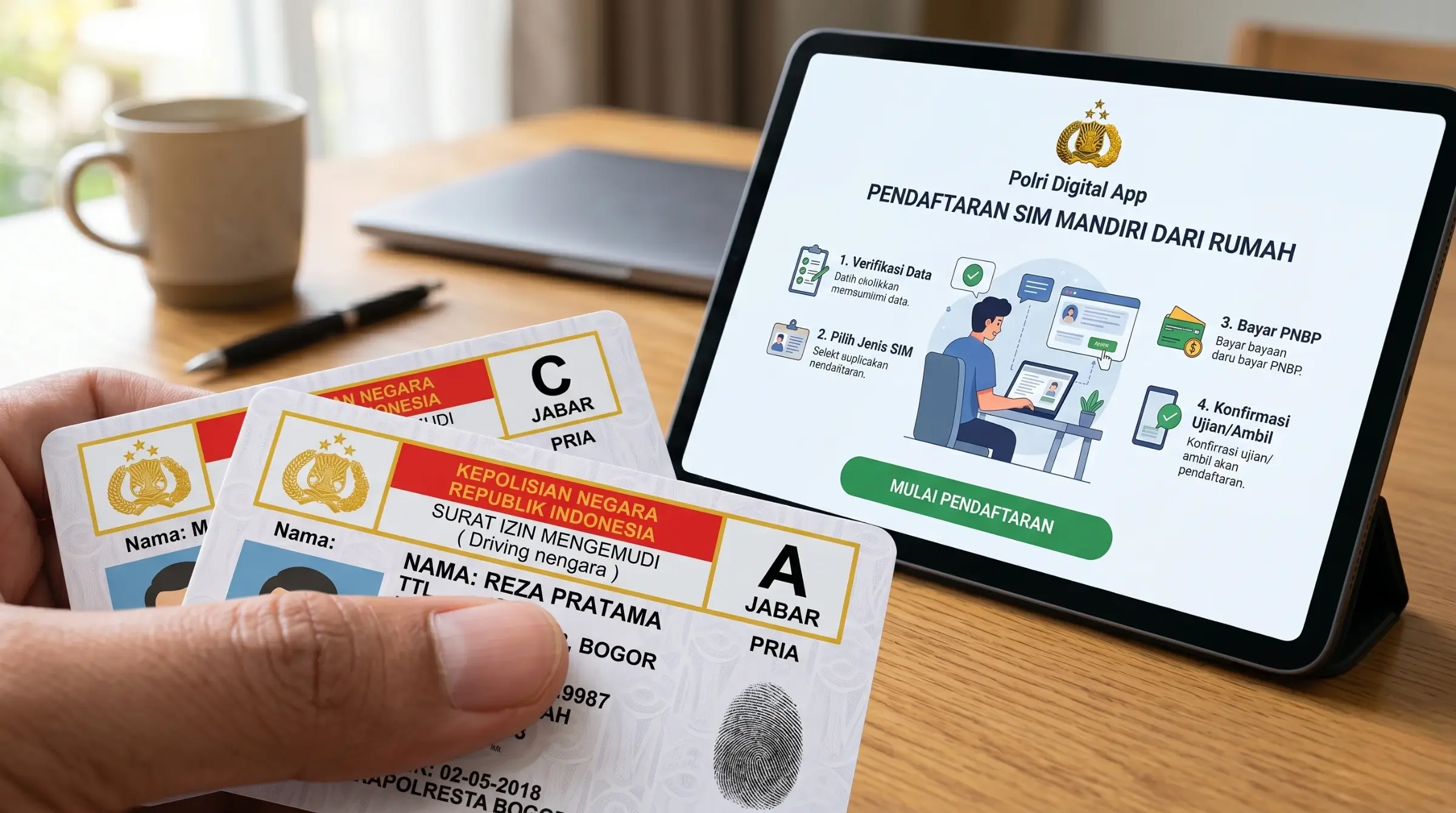
Tips & Tricks
How to Renew Your Driving License Online via Smartphone: Requirements, App & Fees
Want to renew your driving license without waiting in line? Learn how to renew your license online, required documents, fees, and processing times

It’s a common question among car owners in Indonesia: can a car that’s still under financing be traded in? There are many reasons why someone might want to replace their vehicle before the loan term ends.
The motivations vary—from changing family needs, the desire to upgrade to a newer model, to considerations of fuel efficiency or maintenance costs. Meanwhile, the need for a new vehicle may feel urgent, even though the loan is still ongoing.
In short, the answer is yes—with terms and conditions applied. If you’re asking the same question, this guide will walk you through everything you need to know.
This article explains how the trade-in process works for financed cars, what to watch out for, and tips to keep the transaction safe and beneficial.
Read also: Still Confused About the Difference Between EV, Hybrid, and PHEV? Here’s the Simple Explanation
Before discussing the trade-in process, it’s important to understand the ownership status of a financed vehicle.
When you purchase a car on credit, the vehicle is technically still “owned” by the leasing company until the loan is fully paid off. This is reflected in:
Based on these facts, one key requirement for trading in a financed car is involving the leasing company. In other words, the car cannot be sold or traded without their approval.
Since ownership is still tied to the leasing company, any trade-in or sale must be conducted with their knowledge. This process is often referred to as credit transfer (over credit).
This is because the relationship between the car owner and the leasing company is governed by a fiduciary guarantee agreement under Indonesian Law No. 42 of 1999 on Fiduciary Security. Under this law:
Article 23 paragraph (2) clearly prohibits transferring ownership without the leasing company’s consent:
“The Fiduciary Grantor is prohibited from transferring, pawning, or leasing the object of fiduciary security to another party, unless prior written approval has been obtained from the Fiduciary Recipient.”
Violating this regulation can lead to legal consequences. The leasing company may pursue civil action against unauthorized trade-ins.
Additionally, such actions may fall under Article 486 of the Indonesian Criminal Code (Law No. 1 of 2023) concerning embezzlement, with penalties of up to 4 years imprisonment or a maximum fine of IDR 200 million.
From a civil law perspective, the leasing company may also file a lawsuit for unlawful acts under Article 1365 of the Civil Code, which states:
“Any unlawful act that causes damage to another person obliges the party at fault to compensate for the loss.”
The leasing company may also claim breach of contract if the agreement explicitly prohibits selling or trading the vehicle during the loan period. This is commonly referred to as default (wanprestasi).
To avoid legal risks, the trade-in must be done with the leasing company’s knowledge. Here are the most common methods:
The most common approach is to fully pay off the remaining loan balance first. Once settled, the ownership certificate (BPKB) is released, and the car can be traded in normally.
Keep in mind:
In this scheme, the loan is transferred to another party (usually the new buyer). However, this method is rarely used in dealer trade-ins unless the dealer works directly with the leasing company.
Risks include:
This is the most practical method. The dealer helps handle:
The typical process:
Read also: List of Electric Car Terms for New Users
For example:
Then:
On the other hand:
You would need to pay an additional IDR 20 million to cover the difference before proceeding with the trade-in.
Cars lose value over time. In many cases, the resale value may be lower than the remaining loan—especially in the early years.
Potential extra costs include:
The better the condition, the higher the trade-in value. Factors include:
Read also: Understand the Function of Car Spare Parts, Their Types, and Components
Always choose a reputable dealer or one that officially partners with leasing companies to avoid future complications.
A car that is still under financing can indeed be traded in, but the process is more complex than trading a fully paid-off vehicle. You must involve the leasing company, understand your remaining obligations, and factor in potential additional costs.
If convenience is your priority, trading in through a dealer is often the best solution. However, if you aim to maximize your selling price, selling the car independently may be a better option—though it requires more effort.
Most importantly, ensure that the entire process is carried out legally and transparently to avoid future issues. With proper planning, trading in a financed car can be a smart way to upgrade your vehicle without unnecessary financial burden.


 Terbaru.png)
We place cookies in order to make sure our website works properly and to improve your browsing experience, to streamline and personalize our marketing content and to show you personalized advertisements (including on third party websites). We sometimes share cookie data with our partners for these purposes. Our cookies remember your settings and the data you fill out on forms on our website and analyse traffic to our website. Our cookies also register how you found us and collect information about your browsing habits. You can read more about our use of cookies in our Cookie Notice.