Traffic signs are not just markers on the roadside but essential elements that help maintain order and safety for all road users. According to Law No. 22 of 2009 Article 106 Paragraph (4), drivers must obey every instruction shown on traffic signs while driving. This rule is further supported by Government Regulation No. 79 of 2013 and Minister of Transportation Regulation No. 13 of 2014, which define the standards for the shapes, colors, symbols, and placement of traffic signs in Indonesia.
By understanding the meaning of each sign, the function behind every visual shape, and how these signs are applied on the road, drivers can reduce the risk of accidents, make quicker decisions, and drive more responsibly. This article summarizes the definition of traffic signs, the color and shape code system, examples of each official category, and the penalties for violations.
Definition of Traffic Signs According to Regulation
Minister of Transportation Regulation No. 13 of 2014 defines traffic signs as part of road equipment that provides warnings, prohibitions, instructions, or guidance for road users. Each sign is designed with specific shapes, colors, and symbols that allow drivers to recognize and understand them quickly, even while moving.
Colors and Shapes of Traffic Signs
Visually, colors and shapes help drivers process information within seconds.
Color | Common Shape | General Meaning | Example Sign |
| Red | Circle or octagon | Prohibition or restriction | No parking |
| Yellow | Inverted triangle or diamond | Warning | Sharp turn |
| Blue | Circle or rectangle | Mandatory instruction | Turn right |
| Green | Rectangle | Direction or distance | Direction to city |
| Black and White | Rectangle | Additional information | Speed zone |
| Brown | Rectangle | Tourist information | Kuta Beach |
Types of Traffic Signs in Indonesia
Based on Minister of Transportation Regulation No. 13 of 2014, traffic signs are divided into five main categories: prohibition signs, warning signs, mandatory signs, guide signs, and supplemental signs. Each category uses different shapes, colors, and meanings to help drivers identify them easily.
1. Prohibition Signs
Prohibition signs limit or restrict certain actions that could disrupt traffic order or safety. They are usually circular with a white background and a red border. Examples include:
No Parking
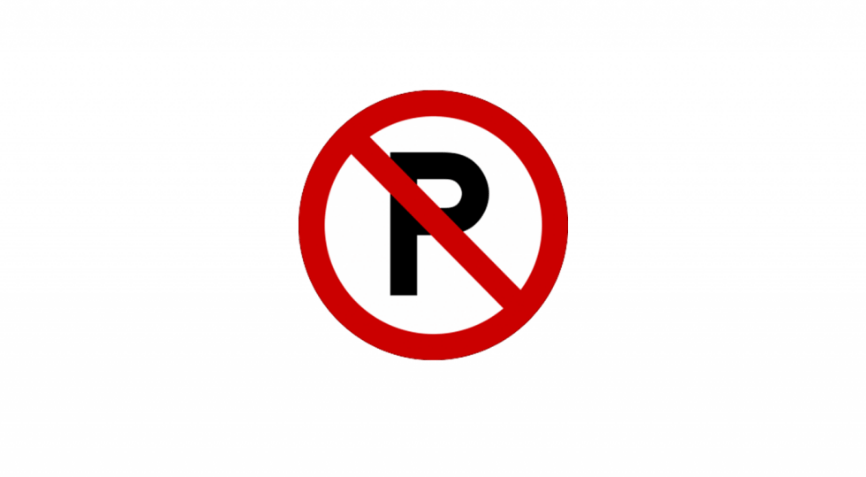
This sign is marked with a large black letter “P” crossed with a red diagonal line. “P” stands for “park,” meaning vehicles may not be parked or left in the area. Cars may still stop briefly to drop off passengers unless a supplemental sign states otherwise.
In emergency conditions, Article 121 of Law No. 22 of 2009 requires drivers to place a warning triangle, hazard lights, or another safety marker. Penalties for violating no-parking rules are regulated by local authorities, commonly known as On-Street Parking Zones. Violations may result in wheel locking, valve removal, towing, or fines up to Rp 500,000.
Stop
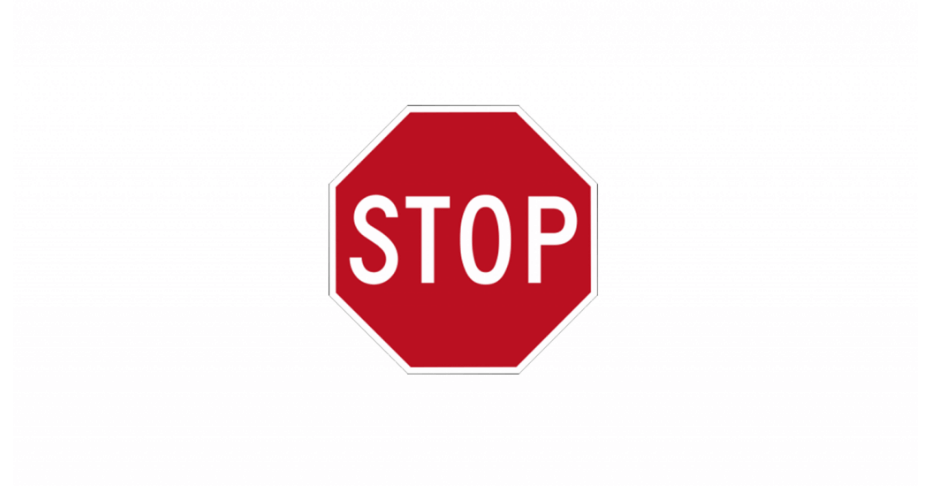
If you see a “STOP” sign, you are required to make a complete stop and continue only after ensuring the road is clear. For example, at intersections with a stop sign, you must stop before the line or at a visible point, check for oncoming traffic, and proceed when safe.
No Entry
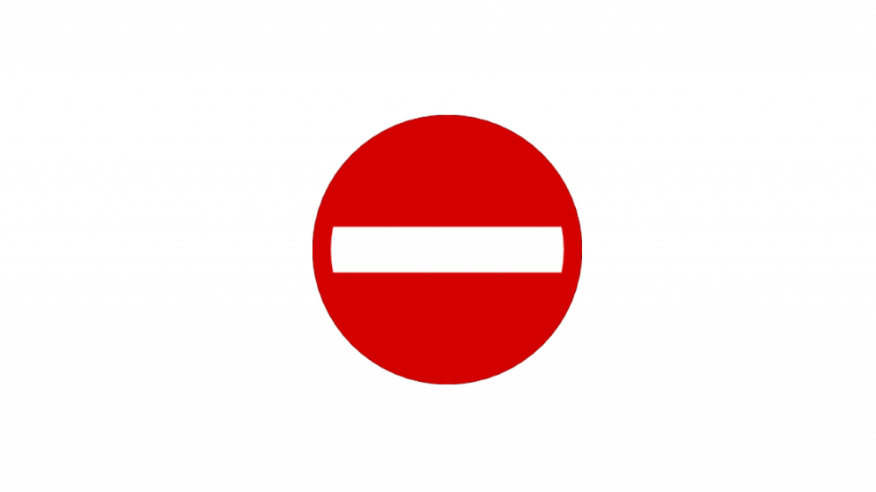
This sign forbids drivers and pedestrians from entering a particular area. Exceptions apply only to those with special permission. It is commonly found at narrow alleys or restricted lanes to prevent congestion.
No U-Turn
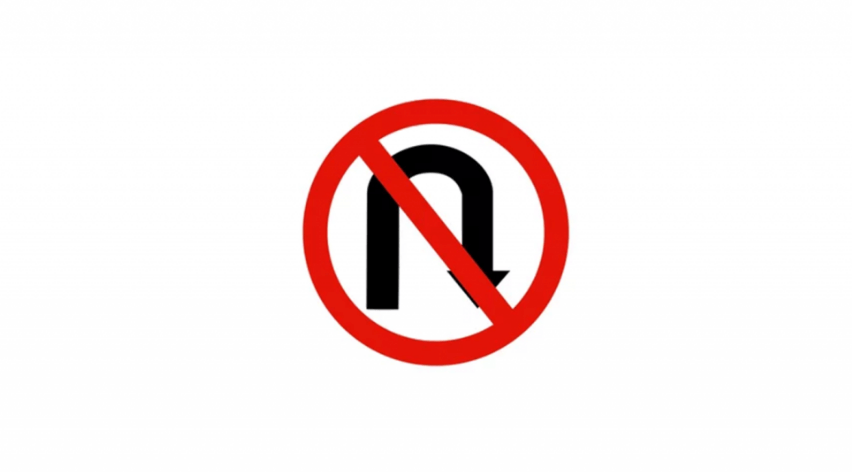
A crossed-out U-turn symbol indicates that drivers are not allowed to turn around in that location. It is usually installed at intersections or on one-way roads to prevent traffic delays. Violations may result in a maximum of two months in jail or a fine of up to Rp 500,000 under Article 287 Paragraph 1.
No Overtaking
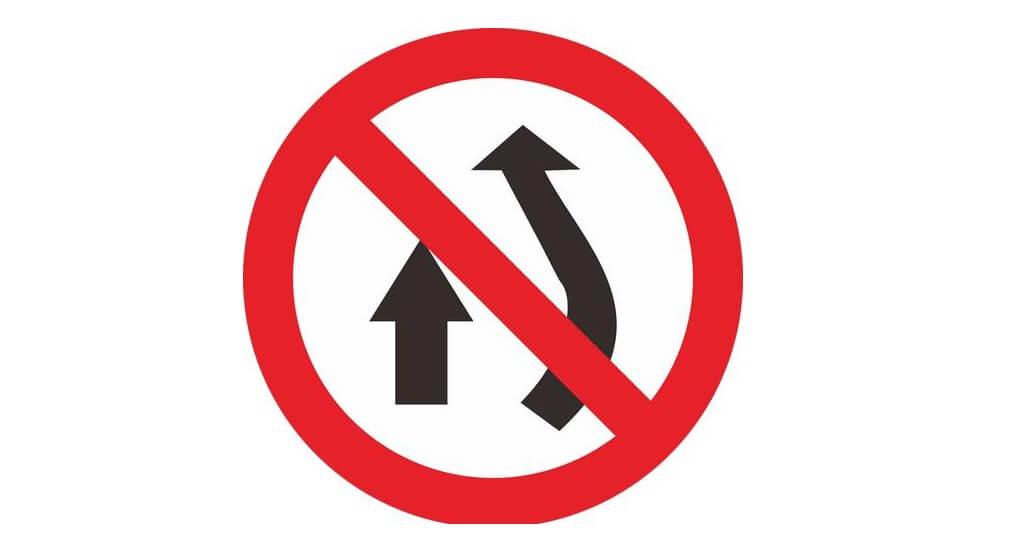
This sign means drivers may not overtake the vehicle in front of them. Article 109 Paragraph (1) of the Traffic Law states that overtaking must be done from the right side only when visibility, road space, and conditions allow it. Drivers must also signal before changing lanes. Overtaking is prohibited in risky areas such as bridges, tunnels, slopes, and uncontrolled intersections.
Penalties include fines up to Rp 500,000 or up to two months in detention. If the violation causes an accident, heavier sanctions may apply under Articles 310 and 311.
2. Warning Signs
Warning signs alert drivers to potential hazards or risky conditions ahead. They usually have a yellow background with black symbols or text. Examples include:
Sharp Left Turn
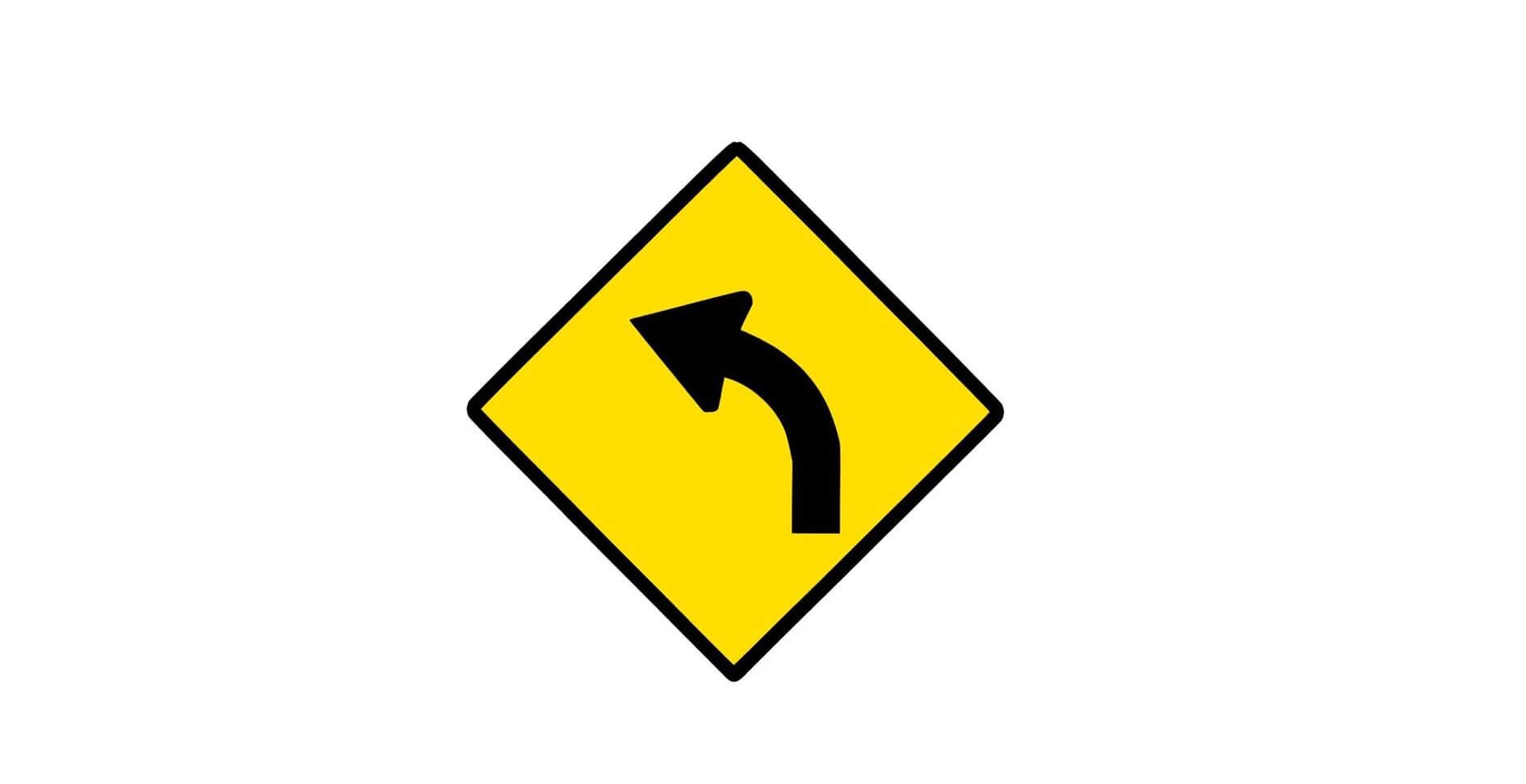
This sign displays a curved arrow pointing left. It warns drivers of a sharp bend ahead so they can reduce speed and adjust their vehicle position. This sign helps drivers anticipate the curve safely and prevent accidents on dangerous turns.
Steep Descent
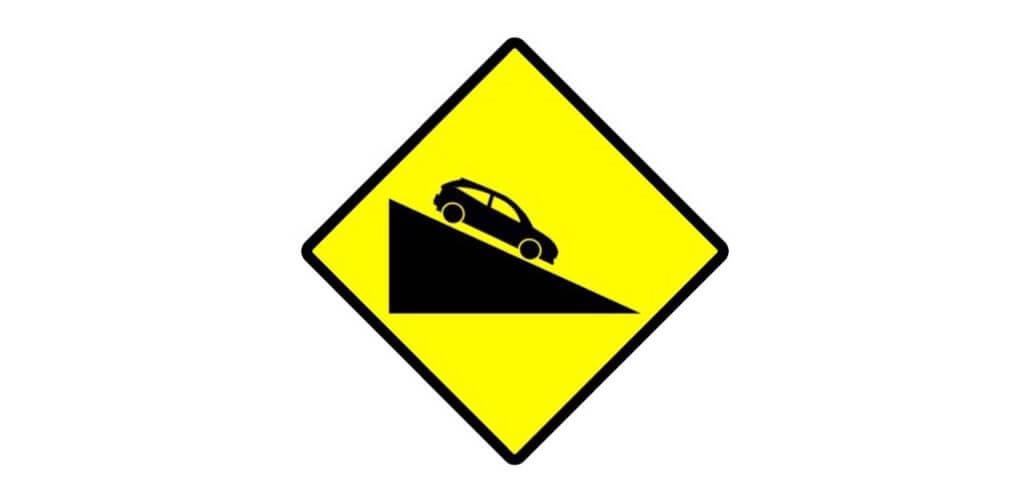
This sign warns that the road ahead slopes steeply downward. It typically shows a vehicle descending on an angled path. Drivers are advised to slow down, shift to a lower gear, and stay alert, especially on mountain roads.
There is also a standard descent sign with a gentler angle, which serves the same purpose but indicates a lower level of risk.
Road Narrowing
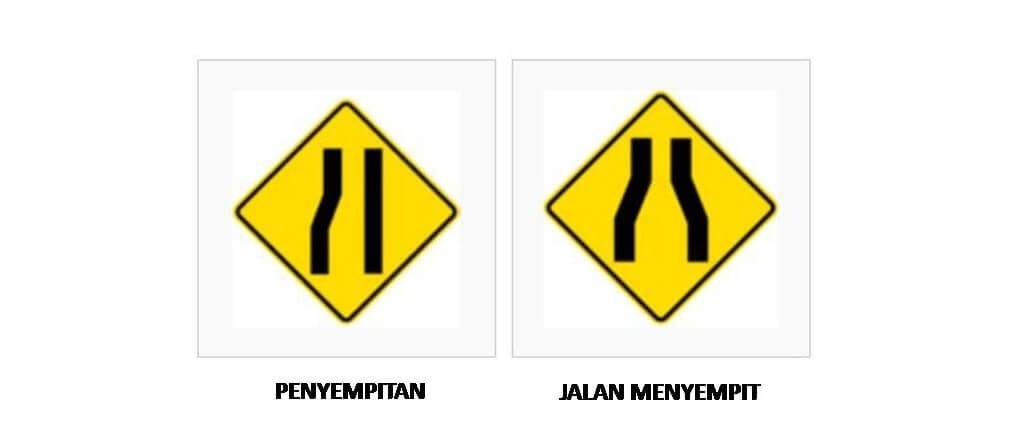
This sign indicates that the road ahead becomes narrower. Variations include narrowing on both sides, narrowing on the left side, narrowing on the right side, and narrowing due to construction. Drivers should reduce speed and be prepared to adjust lanes or yield.
Railroad Crossings
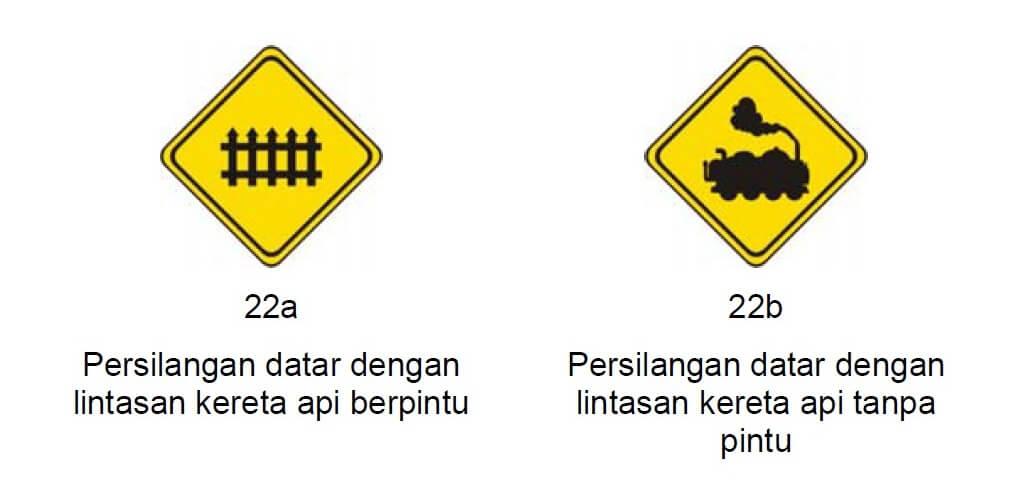
A gated railroad crossing warning sign (number 22a) indicates that the railway line ahead is equipped with a barrier. Drivers should remain alert, but they can feel more secure because the barrier will close when a train is approaching to prevent vehicles from crossing. Meanwhile, an ungated railroad crossing warning sign (number 22b) signals that the crossing does not have a barrier, which means drivers must be extra cautious. They are required to give absolute priority to the train and stop briefly to ensure the tracks are clear before proceeding.
These signs are regulated under the Minister of Transportation Regulation and Law No. 22 of 2009 on Road Traffic and Transportation, which mandate that drivers give way to trains for safety at level crossings. Proper installation of these signs is essential to reduce accidents at locations where roads and railway tracks intersect on the same level, as these areas are often high-risk points.
Intersections
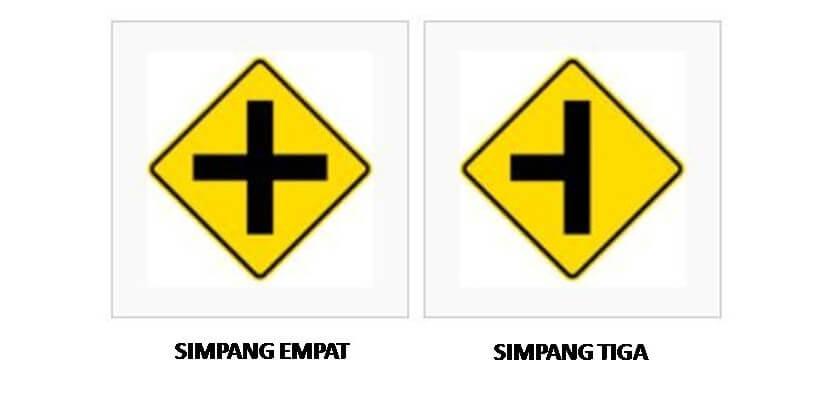
There are several types of intersection signs, such as:
- T-Junction, represented by an arrow forming the shape of the letter “T” or a symbol that resembles a “T” with a connecting line.
- Y-Junction, marked with an arrow that resembles the letter “Y.”
- Roundabout, illustrated with three circular arrows forming a loop to indicate the presence of a roundabout.
- Four-Way Intersection, shown using a cross or plus symbol (+).
- Three-Way Intersection, depicted as a cross with one side removed (either left or right).
- Two-Way Traffic, represented by two opposite arrows pointing upward and downward.
3. Mandatory Signs
Mandatory signs inform drivers about actions they must take on certain sections of the road. These signs are typically circular with a blue background and white symbols or text. Their purpose is to ensure road users follow specific rules so that traffic remains orderly and safe for everyone.
Mandatory Turn
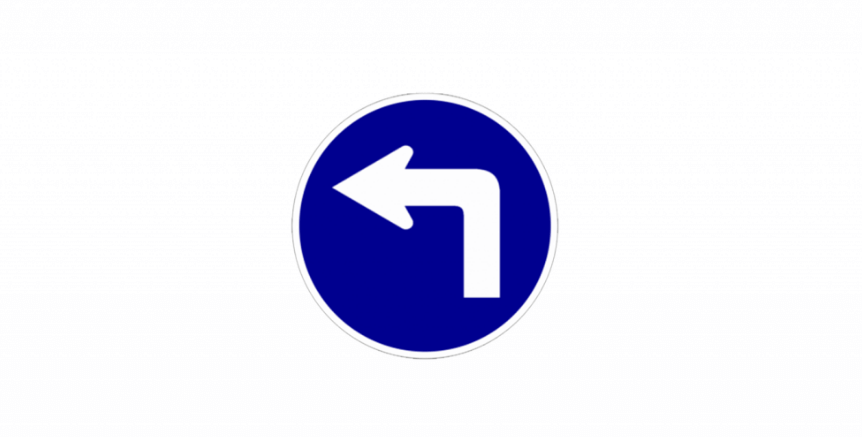
The mandatory turn sign is usually a blue circle with a white arrow pointing clearly to the left or right, meaning drivers must follow that direction. For example, the sign shown above instructs drivers to turn left at a particular intersection or point. If the sign is not present, drivers must still comply with other traffic regulations or traffic lights, which include stopping at a red light and avoiding left turns if no permission is given.
Mandatory Straight Ahead
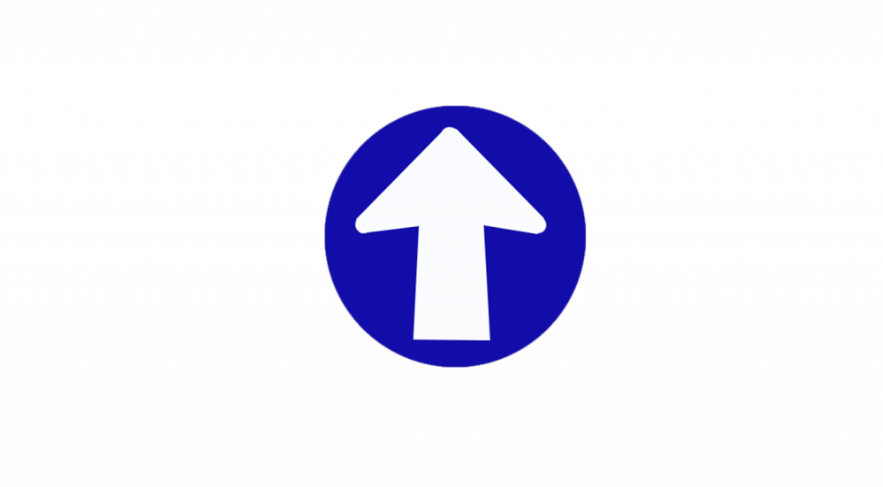
This sign instructs drivers to continue straight without turning right, left, or making a U-turn. It is usually a blue circular sign with a white upward arrow. Its main function is to maintain smooth traffic flow and reduce the risk of congestion or accidents, especially on one-way roads or intersections designed for straight movement only.
Minimum Speed Requirement
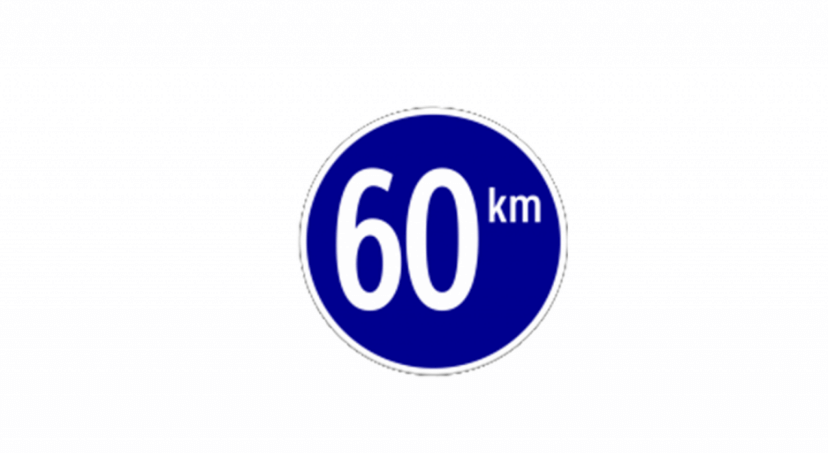
A minimum speed sign is circular with a blue background and white numbers that show the lowest allowable speed, such as a minimum of 60 km/h. This sign ensures that vehicles do not move too slowly in specific areas, such as highways, where consistent speed is necessary for safety and the smooth flow of traffic. Drivers are required to maintain at least the minimum speed indicated to avoid disrupting others on the road.
Mandatory Bicycle Lane
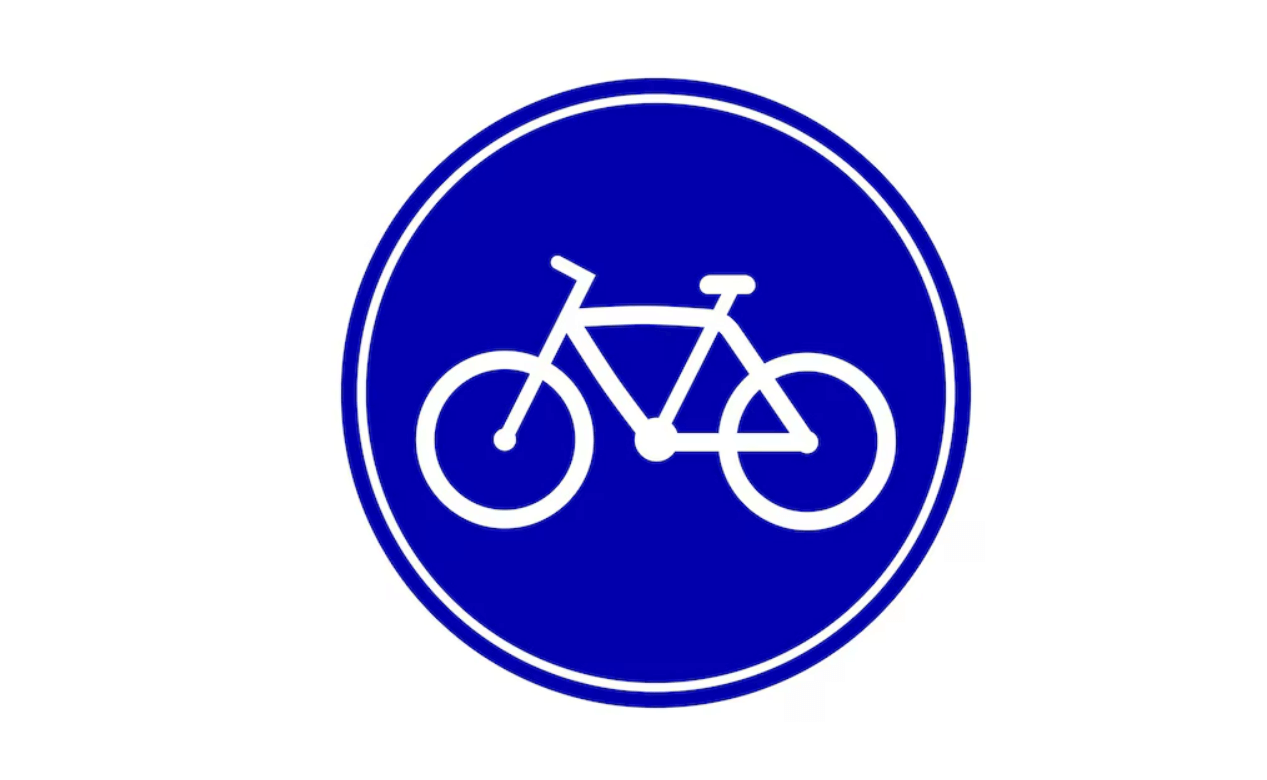
Cyclists in Indonesia must use a designated bicycle lane when one is provided. They are not allowed to ride on lanes meant for motor vehicles if a bicycle lane is available, as stated in Article 122 Paragraph (1)(c) of Law No. 22 of 2009 on Road Traffic and Transportation. Violations may result in up to 15 days of detention or a maximum fine of Rp 100,000.
If no special bicycle lane exists, cyclists must use the road shoulder or the leftmost edge of the roadway. Cyclists are also prohibited from riding more than two abreast to avoid obstructing other road users. Riding on the sidewalk is only allowed if a sign permits it or if the cyclist is under 13 years old and the sidewalk is sufficiently wide.
Motor vehicles are prohibited from parking in bicycle lanes to ensure cyclist safety. Many major cities such as Jakarta, Solo, and Bandung continue to develop bicycle-friendly infrastructure to support safer and more comfortable cycling.
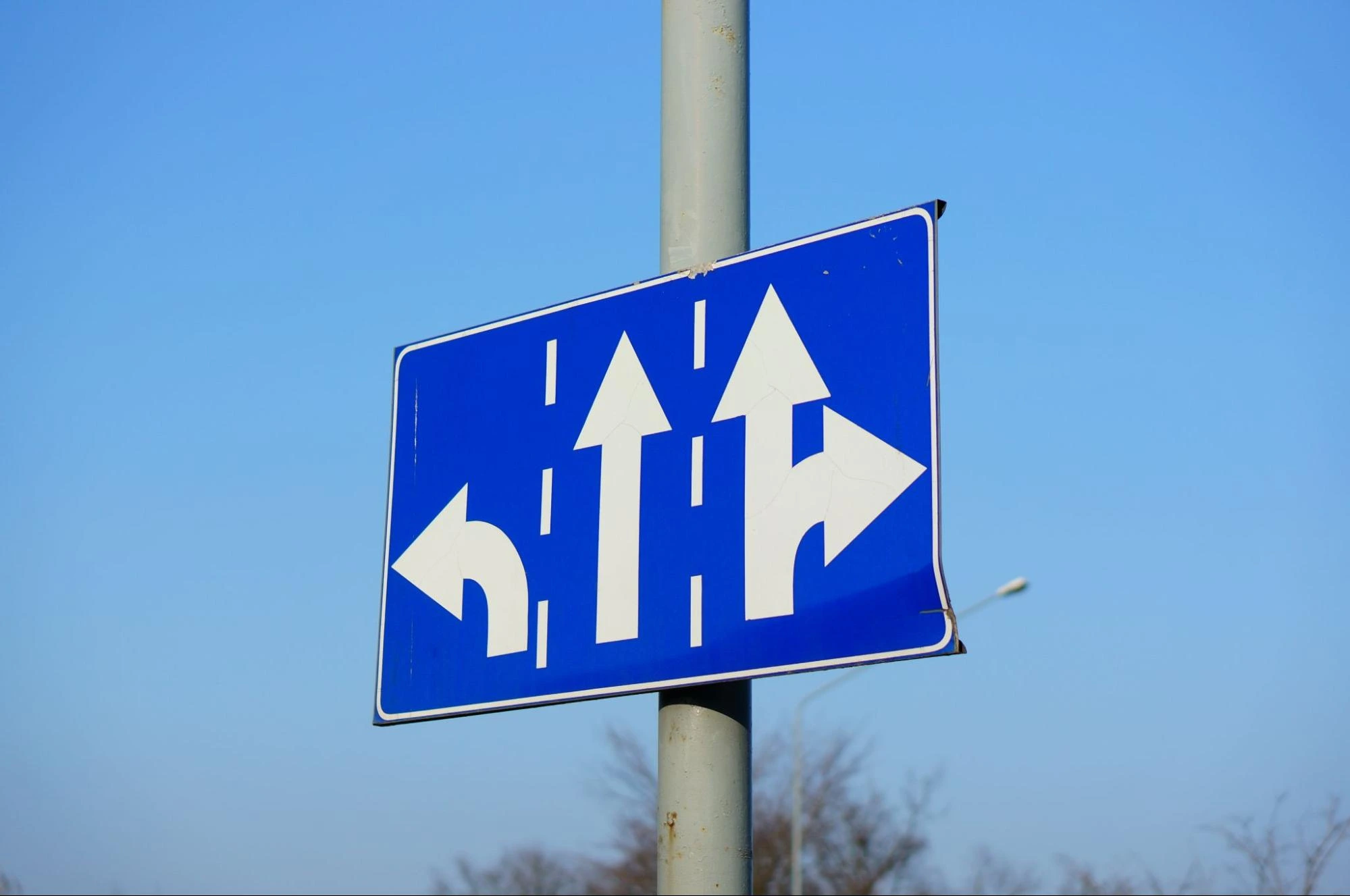
Mandatory Lane Direction
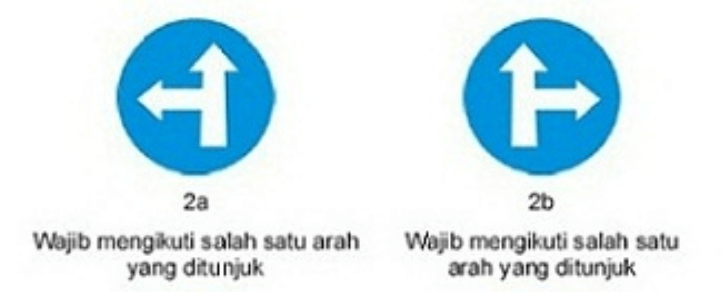
This sign instructs drivers to follow one of the designated lane directions. It is usually a blue circular sign with a white arrow. Drivers must choose a specific lane indicated by the arrow, such as one pointing diagonally left or right toward a particular lane.
Its primary purpose is to regulate traffic flow where multiple lanes split, such as at highway interchanges or lane-dividing areas, ensuring smoother and more organized movement. Similar mandatory signs may instruct drivers to turn left, turn right, or move straight, but this one specifically applies to selecting one of several designated directions.
4. Guide Signs
Guide signs provide information or directions to help road users reach specific locations such as cities, regions, public facilities, or tourist sites. These signs typically use capital letters at the beginning of words, followed by lowercase letters, or they may be written entirely in uppercase.
Direction Guidance
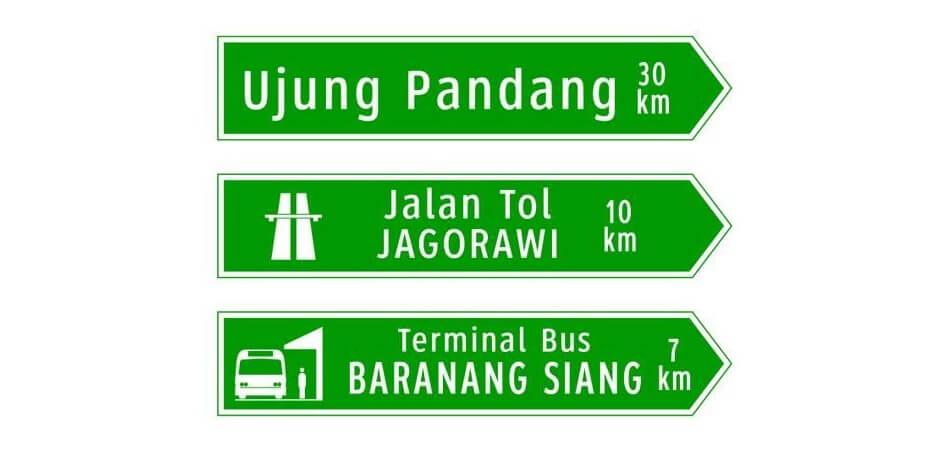
These signs help drivers find their way to cities, regions, or certain destinations. They usually have a green background with white text, displaying place names along with directional arrows. They are particularly important at intersections or intercity roads so drivers can remain on the correct route and reach their destination efficiently.
Public Facility Guidance
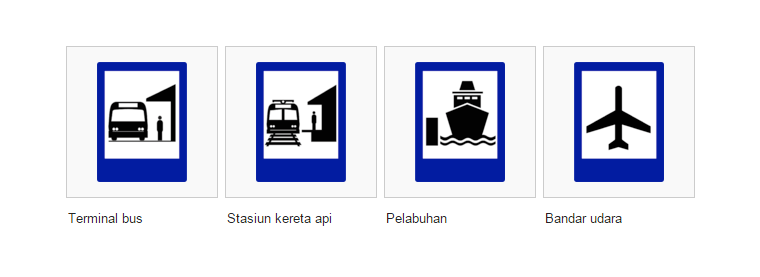
These signs indicate the location of important public services such as gas stations, hospitals, places of worship, or public restrooms. They use a blue background with white text or symbols, signaling that the facility is accessible in the nearby area.
Tourist Attraction Guidance
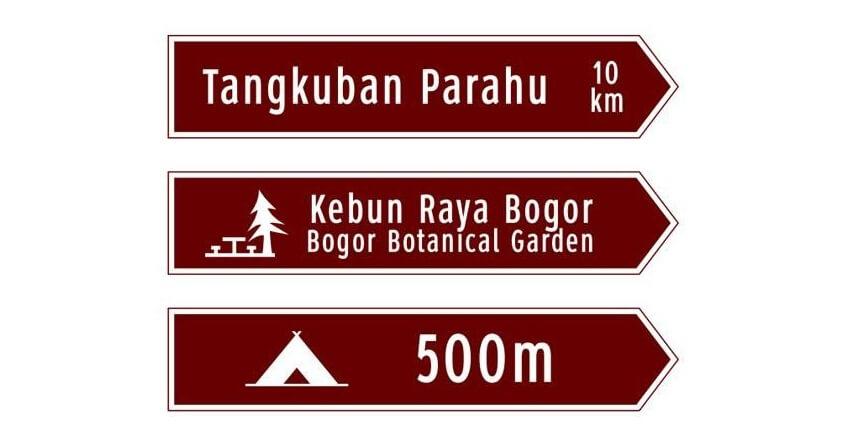
Tourist direction signs help guide drivers toward tourist sites or recreational areas. They have a distinctive brown background with white symbols or text, making them easy to distinguish from other guide signs. They are often found along routes leading to natural attractions, recreation parks, or cultural heritage sites.
5. Supplemental Signs
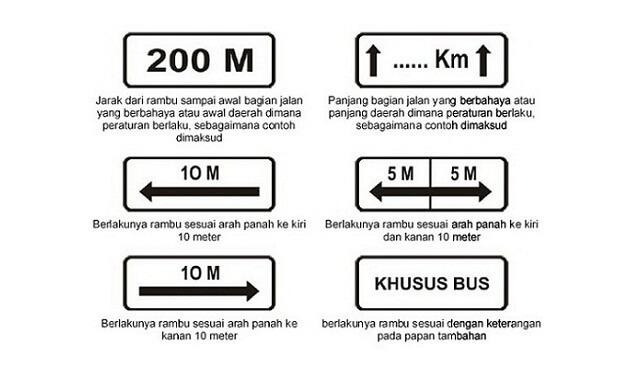
Supplemental signs provide additional information to complement a main sign. They often indicate specific conditions such as time restrictions, applicable distance, permitted vehicle types, or other traffic engineering notes. They are installed directly below the main sign with a distance of about five to ten centimeters, and their height must not exceed the lower edge of the main sign.
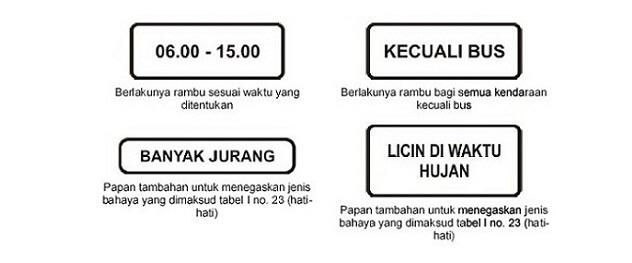
These signs have a white background with black text and borders to ensure readability. The information must be concise, clear, relevant to the main sign, and easy for drivers to understand. They are typically rectangular with a length-to-height ratio of 1:2, depending on the amount of information that needs to be displayed.
Electronic and Temporary Traffic Signs
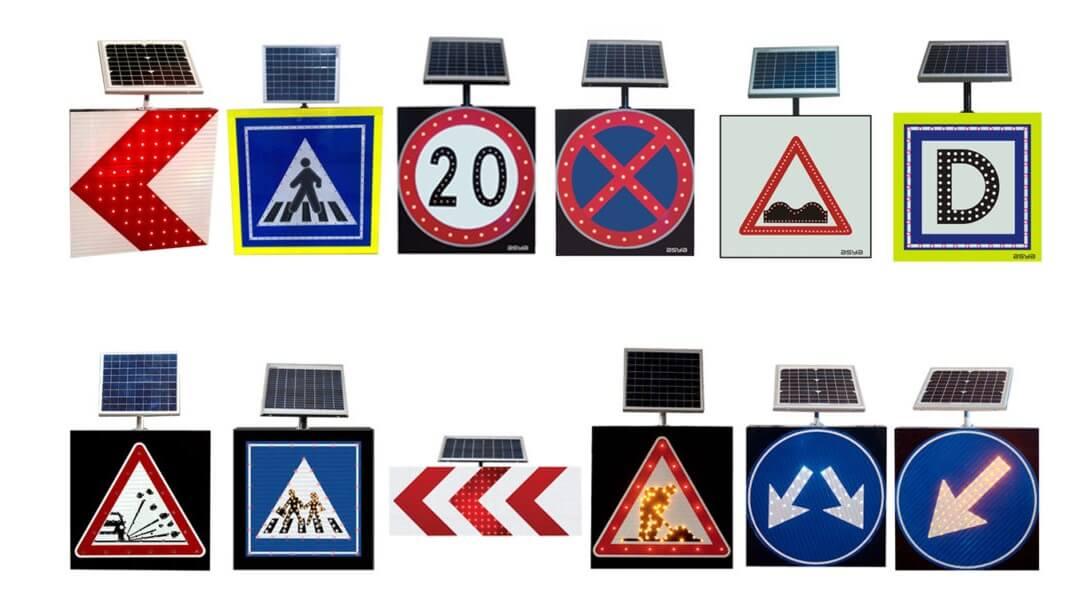
With advancing technology, electronic and temporary traffic signs are now widely used to adapt to real-time traffic conditions. Electronic signs often use LED panels or digital systems to display messages, symbols, or warnings that can change based on the current situation.
These signs are commonly used in urban areas, highways, or construction zones to inform drivers about traffic conditions, vehicle speeds, or severe weather alerts. Temporary signs, on the other hand, are portable and used for road construction, traffic diversion, or emergency situations such as accidents or flooding.
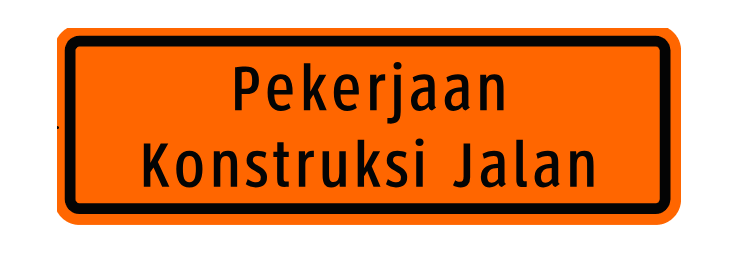
Both play an important role in improving safety and traffic flow because they provide up-to-date information that helps drivers make quick decisions.
What is the Difference between Temporary and Permanent Traffic Signs?
Temporary signs are used for specific situations, such as roadwork or traffic diversions, and are usually portable and easy to move. Permanent signs are installed permanently in locations where they serve ongoing functions.
Who is Authorized to Install Traffic Signs in Indonesia?
The installation and maintenance of traffic signs are carried out by the Ministry of Transportation or the regional transportation authorities, depending on whether the road is national, provincial, or under local government responsibility.
Can I Install My Own Traffic Sign In Front of My House or Shop?
No. Only authorized agencies may install traffic signs because they involve public safety and must follow the official standards set by Minister of Transportation Regulation No. 13 of 2014.
Traffic signs are not decorations on the side of the road, but essential guides for everyone’s safety. By following each instruction and symbol, we contribute to reducing accidents and building a culture of responsible driving. Treat traffic signs as part of your ethics and accountability on the road. Want to learn more safe-driving tips and insights? Explore more articles here.