


Tips & Tricks
5 Essential EV Safety Features You Must Have in 2026
Learn about the 5 essential electric vehicle (EV) safety features you must have in 2026 for maximum protection of drivers and passengers.
When a car passes by silently and elegantly, we often forget that thousands of small "explosions" are happening every minute under its hood. An Internal Combustion Engine essentially works by burning a mixture of gasoline and air, which produces very loud booming sounds.
Without a silencing component, your car would sound deafening, much like an old fighter jet engine. This is where the Muffler plays the role of an unsung hero.
The muffler is not just a smoke exhaust pipe. It is an acoustic engineering device designed with precision to "tame" the wild sounds of the engine into a smooth hum that is comfortable to hear. Let's dissect this vital component deeper.
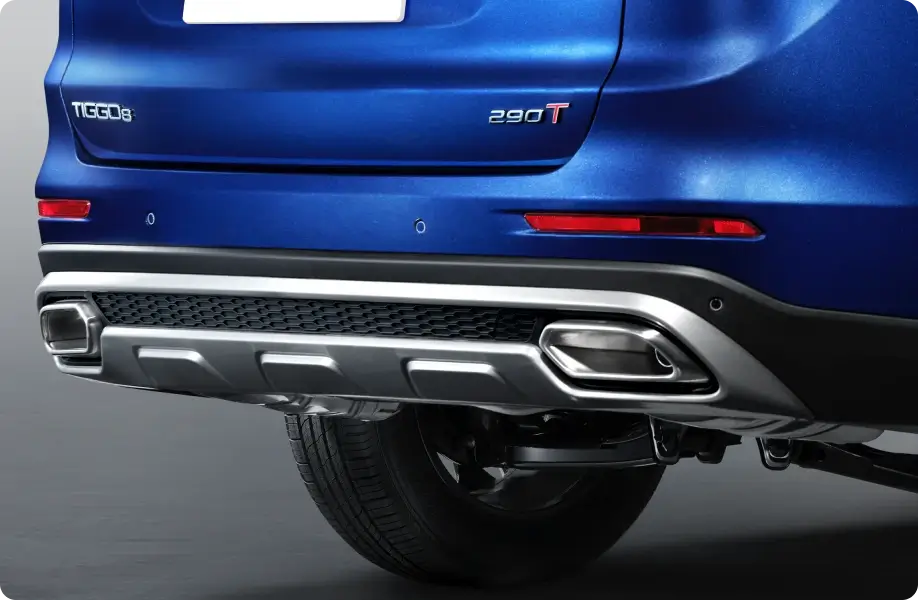
The muffler is located at the end of the exhaust system, right before the tailpipe visible on the rear bumper. Its function is more complex than just an air duct:
How can a metal tube eliminate loud sounds? The answer lies in a physics principle called Destructive Interference.
Inside the muffler tube, there is an intricate labyrinth consisting of baffles, perforated pipes, and resonance chambers.
Not all mufflers are created equal. Differences in internal design will result in different sound characters and performance.
This is the type used by 90% of standard factory daily cars (OEM).
Often referred to as a Free Flow or Racing exhaust.
In modern vehicle design, automotive engineers work hard to balance engine performance and Cabin Quietness. A good muffler is key so passengers can chat without needing to shout.
You can feel this premium standard of silence in the Chery Omoda 5 (C5). The exhaust system on this crossover has been designed with high precision. Its muffler works effectively to dampen noise from its turbo engine, filtering out harsh sound frequencies, and leaving a smooth yet sporty engine sound when you accelerate.
The muffler is a critical component that maintains harmony between a powerful engine and driving comfort. Understanding its types helps you not to change the exhaust arbitrarily, because an exhaust that is too "open" (free flow) on a standard engine can actually lower daily performance.
Whether through advanced dampening systems in gasoline engines or exhaust-free technology in electric cars, the goal remains the same: to provide peace on every journey.


 Ini Manfaat & Cara Kerjanya.webp)

We place cookies in order to make sure our website works properly and to improve your browsing experience, to streamline and personalize our marketing content and to show you personalized advertisements (including on third party websites). We sometimes share cookie data with our partners for these purposes. Our cookies remember your settings and the data you fill out on forms on our website and analyse traffic to our website. Our cookies also register how you found us and collect information about your browsing habits. You can read more about our use of cookies in our Cookie Notice.