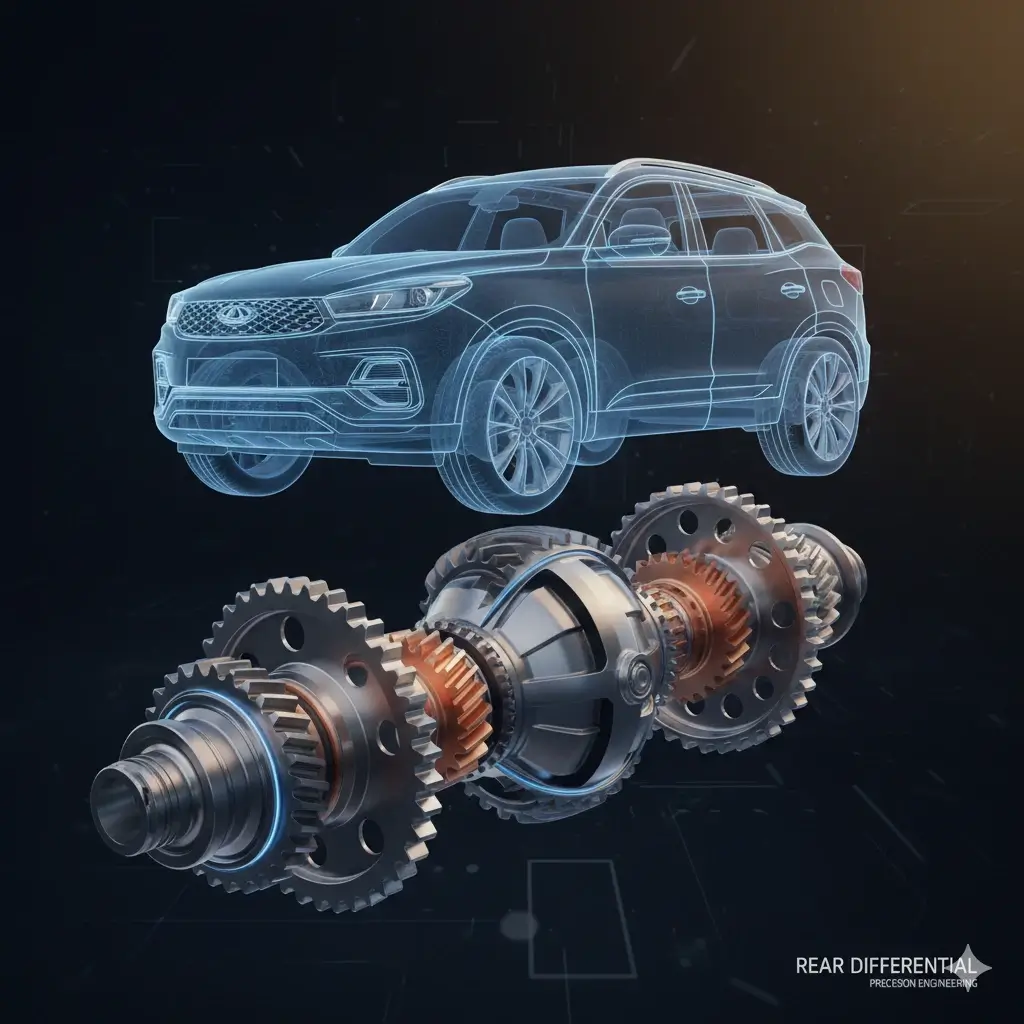
The Differential (often called Gardan in Indonesia) is a powertrain component that functions to transmit rotational power from the engine to the wheels and regulate the difference in rotational speed between the left and right wheels when the vehicle turns. This rotational difference is crucial so that the car can maneuver stably without causing tire slip or damaging the axle shafts. This article will outline the main functions of the differential, its technical working mechanism, and the identification of damage symptoms that every vehicle owner must be aware of.
Main Functions of the Differential in Vehicles
The primary function of the differential is to adjust wheel rotational speed based on the path taken when maneuvering. Without a differential, both wheels on one axle would rotate at the same speed, making control difficult when turning.
Some specific functions of the differential include:
- Changing Rotation Direction: Converting rotation from the longitudinal propeller shaft into transverse rotation towards the axles.
- Reducing Speed: Increasing torque or vehicle rotational power by reducing engine rotational speed through gear arrangements.
- Splitting Power: Distributing power evenly to both rear wheels (in RWD drives) or front wheels (in FWD drives).
Understanding these functions is closely related to the difference between FWD and RWD drive systems, which affects the location and configuration of the differential on your car.
How the Differential Works While Driving
The differential mechanism works automatically using a planetary gear arrangement to divide traction proportionally.
1. Straight Road Position
When the car moves on a straight road, the load on the left and right wheels is the same, so the differential only functions as a rotation transmitter without differentiating speed. The gears inside the differential case rotate together as a single unit.
2. Turning Position
When the car turns, the inner wheel has a shorter travel distance compared to the outer wheel, so the differential automatically provides faster rotation to the outer wheel. This is possible due to the spider gear which rotates independently to provide power distribution flexibility.
This mechanism works as a unified transmission system that also involves the performance of the car clutch in transmitting power from the engine to the wheels.
Signs of Differential Damage to Watch Out For
Differential damage is usually caused by poor oil quality or internal components that are worn out due to extreme friction. Early detection is very important to prevent the replacement of more expensive car spare parts.
Here are the clinical symptoms of differential damage:
- Whining Sound: A humming or whining sound that gets louder as the car's speed increases, usually indicating the differential gears are no longer precise.
- Vibration on Car Body: Unnatural vibration felt at the bottom of the vehicle, especially when accelerating or shifting gears.
- Oil Leak: The presence of oil drips in the middle of the rear (or front) axle shaft indicating a differential seal leak.
- Jerking During Acceleration: A rough jerk occurs when you start moving the car or when releasing the clutch.
To avoid permanent damage, ensure you perform types of car service that include routine differential oil changes according to the manual book.
Conclusion
The differential is a vital component that guarantees your stability and comfort when maneuvering. By maintaining lubrication quality and performing routine checks, you can ensure power distribution to the wheels remains optimal. Immediately perform a check if you hear strange sounds from the bottom of the car to avoid the risk of wider damage.
Want to consult regarding the health of your vehicle's drive system or plan to switch to a unit with the latest transmission technology?
Schedule a Test Drive Now to experience directly the engine sophistication and suspension comfort of Chery's flagship units.