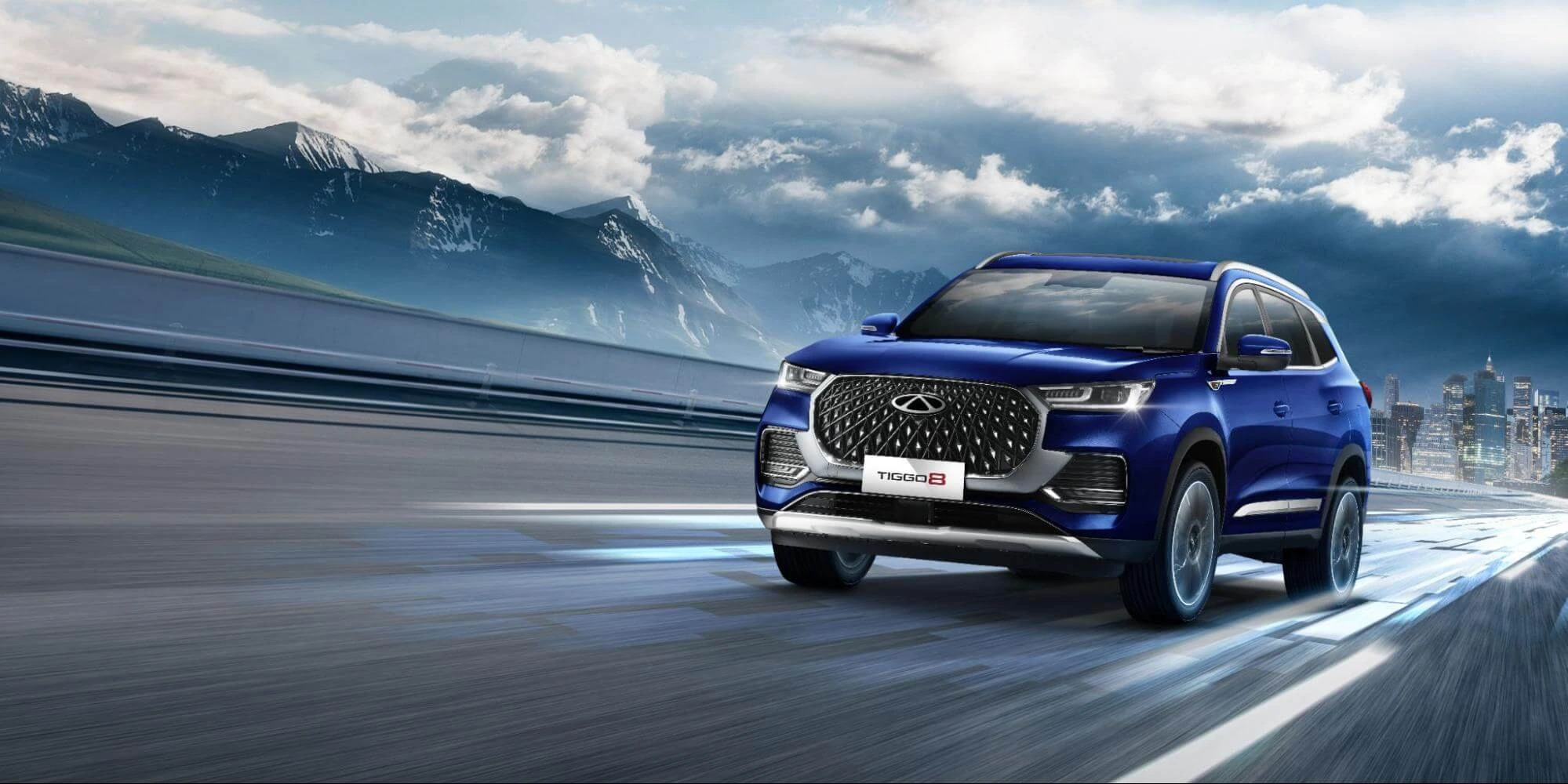
Chery now offers two premium 7-seater SUVs within the Tiggo 8 lineup. The standard Tiggo 8 uses a turbocharged gasoline engine, while the Tiggo 8 CSH is a Plug-in Hybrid Electric Vehicle (PHEV). From the outside they look similar to family SUVs, but the technology orientation is completely different.
The difference in power source is exactly why many potential buyers are starting to compare Tiggo 8 vs Tiggo 8 CSH before buying to ensure the vehicle stays relevant in the long run.
To make it easier to evaluate both options, this article breaks down the differences between the Tiggo 8 and Tiggo 8 CSH in terms of engine specifications, powertrain technology, interior features, ADAS, and price so you can determine which one offers the better value based on your driving style, daily routes, and operational cost priorities.
Technical Specifications: Engine, Output, and Efficiency
The most fundamental difference lies in the powertrain. The Tiggo 8 uses a 1.6 L Turbo GDI gasoline engine with a conventional ICE character, delivering linear response and stable power. With around 197 hp and 290 Nm of torque, it is more than capable for hauling seven passengers through city routes and toll roads.
The Tiggo 8 CSH goes in a different direction. Its PHEV system combines a 1.5 T engine with two electric motors and a large battery. Total combined output exceeds 342 hp and 525 Nm. With pure electric driving capability of up to 90 km per charge and a total range of up to 1300 km, the daily driving character leans much more toward electric drive. This is why its efficiency is significantly higher than a conventional ICE SUV.
For energy efficiency, the gap is very obvious. The gasoline Tiggo 8 averages around ±12 km/l, which is typical for a modern 7-seater turbocharged ICE SUV. Meanwhile, the Tiggo 8 CSH claims the equivalent of ±76 km/l in optimal PHEV driving scenarios. In other words, if your priority is performance and efficiency, the Tiggo 8 CSH operates in a different league from the gasoline Tiggo 8.
Turbocharged Engine vs Super Hybrid Technology
Looking deeper, the performance output is not the only difference. The core system engineering is also distinct. Chery’s Super Hybrid Technology in the Tiggo 8 CSH is built on three pillars:
- DHE (Dynamic Hybrid Engine)
- DHT (Dedicated Hybrid Transmission)
- DHB (Dynamic Hybrid Battery)
This trio enables pure EV, parallel hybrid, and series hybrid modes, all managed automatically based on driving conditions.
The standard Tiggo 8 focuses on modern ICE engineering with turbocharging and direct injection, which is ideal for long-distance touring and daily urban driving without the complexity of large batteries and electrified components.
So both are powerful in their own way. The Tiggo 8 CSH delivers EV-like driving without range anxiety, and the Tiggo 8 remains ideal for drivers who prefer a conventional gasoline engine without thinking about charging at all.
Also Read: Driving Mode Guide for Chery Tiggo 8 CSH: When to Use Smart Mode, Initial Mode, and Force Mode?
Fuel Consumption Comparison
The gasoline Tiggo 8 averages ±12 km/l which is reasonable for a 7-seater turbocharged SUV. Meanwhile the Tiggo 8 CSH reaches the equivalent of ±76 km/l when using electric drive optimally. This shows that shifting from ICE to Super Hybrid is not only a jump in technology but also a massive leap in real-world efficiency.
This efficiency gap can significantly cut operational cost per month, especially for users with short to medium daily commuting patterns in stop and go city traffic.
Interior & Feature Differences
Both Tiggo 8 models are positioned as premium SUVs. However, the CSH variant leans more toward a future-forward digital experience. Highlights of the Tiggo 8 CSH include:
- 15.6 inch 2.5K infotainment screen
- 12 speaker premium sound system
- V2L external power supply
- Nap mode
- Panoramic sunroof
- 19 inch wheels
- Flush door handles
- Ventilated massage seats with foot rest
The gasoline Tiggo 8 already offers a modern interior package for its class:
- 8 speaker audio
- Dual zone AC
- Standard sunroof
- 18 inch wheels
- Leather seats and infotainment for comfort
In short both are premium 7-seaters, but the cabin experience is noticeably different. The Tiggo 8 represents a premium conventional ICE SUV, while the Tiggo 8 CSH feels like the future of PHEV comfort.
Safety & ADAS
For ADAS safety, the Tiggo 8 CSH is more complete. This makes sense because the CSH is the latest release in the Tiggo 8 lineup and is expected to offer the most advanced variation of features.
| Feature | Tiggo 8 | Tiggo 8 CSH |
| 360° Camera | Yes | Yes (540° on higher trim) |
| ADAS Functions | 9 | 14 |
| IP68 Battery | No | Yes |
| Platform | T1X | T1X |
| Extra Sensors | No | Front additional sensors |
Pricing and Purchase Value
Estimated OTR Jakarta price range:
- Tiggo 8 gasoline: ± Rp 356–398 million
- Tiggo 8 CSH: ± Rp 499–519 million
The price gap sits around ±30 to 40 percent. This difference is proportional to the extra PHEV value, as hybrid systems are more complex and technically superior compared to conventional gasoline configurations.
Is the Tiggo 8 Still Relevant in the PHEV Era?
Yes. The Tiggo 8 remains relevant because the 7-seater ICE SUV segment still has strong demand, especially among family buyers who prioritize more affordable ownership cost and are not yet ready to transition to EV or PHEV due to price and charging infrastructure limitations.
So which one fits you better? Ultimately it depends on your usage and personal preference. Do you prefer to stay with the simpler gasoline turbo system, or are you ready to start stepping into hybrid technology for long-term efficiency?
If you are still unsure, the most objective way is to test drive both at the nearest Chery dealership. Feel the pedal response, suspension comfort, and acceleration character in real driving conditions because sometimes the most decisive differences only appear once you are behind the wheel.