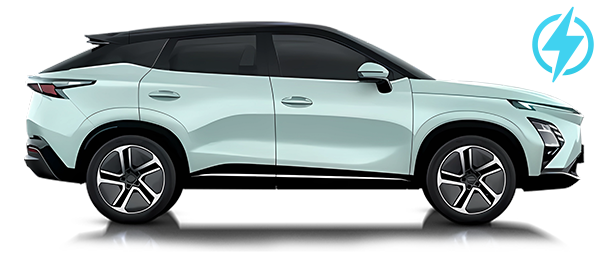
In recent years, electrified vehicles have become increasingly common on Indonesian roads. Some of these cars are equipped with technologies such as EV, HEV, PHEV, and REEV.
These terms may seem similar, but they operate on different working systems. As a result, many prospective buyers struggle to choose the technology that best suits their daily needs, whether for urban mobility or long-distance travel.
Therefore, before making a choice, let's understand the differences between EV, HEV, PHEV, and REEV so you can select a vehicle that aligns with your lifestyle.
What is EV (Electric Vehicle)?
EV or Electric Vehicle is a vehicle entirely driven by an electric motor, using the energy stored in its battery as the primary power source. Its battery can be recharged via external charging at home or a charging station, meaning the vehicle requires no gasoline at all.
This technology is suitable for users who prioritize energy efficiency, low operational costs, and a silent driving experience. Examples of EV cars you can find from the Chery brand are the Chery E5 and Chery J6, which have a range of around 400 km with a battery capacity of around 60 kWh.
Read also: Why the J6 is the Perfect Choice for a City-to-Nature Lifestyle
What is HEV (Hybrid Electric Vehicle)?
HEV or Hybrid Electric Vehicle combines a gasoline engine and an electric motor working together to drive the vehicle. An HEV battery does not need to be charged with a charger because its energy is obtained from the engine and regenerative braking when the vehicle slows down or brakes.
This technology is suitable for users who want better fuel efficiency without changing their driving habits. An example of an electric car equipped with HEV technology from the Chery brand is the Chery Tiggo Cross CSH.
What is PHEV (Plug-in Hybrid Electric Vehicle)?
PHEV or Plug-in Hybrid Electric Vehicle is an evolution of HEV featuring a larger capacity battery that can be charged with an external charger. The vehicle runs on electric power first, and then the gasoline engine activates when the battery power runs low.
This technology is suitable for users who want the sensation of electric driving alongside the flexibility of long-distance travel, such as in the TIGGO 8 CSH and TIGGO 9 CSH. Examples of electric cars from the Chery brand that use PHEV technology are the Tiggo 8 CSH and Tiggo 9 CSH.
Read also: 7 Advantages of the Chery Tiggo 8 CSH That Other Hybrid Cars Do Not Offer
What is REEV (Range-Extended Electric Vehicle)?
REEV or Range-Extended Electric Vehicle uses an electric motor as its main drivetrain, while the gasoline engine solely functions as an electrical generator. When battery power drops, the generator produces additional energy to extend the vehicle's driving range.
This technology is ideal for users who desire a pure electric car experience without range anxiety.
The Differences Between EV, HEV, PHEV, and REEV
Although they all fall under the category of electrified vehicles, each technology is designed to meet different user needs. Let's take a look at a brief comparison below:
1. Power Source
EV only uses electrical energy from the battery. HEV utilizes a combination of a gasoline engine and an electric motor to drive the vehicle alternately or simultaneously. PHEV and REEV also use electricity and a gasoline engine, but with different functions in their drivetrains.
2. Charging Method
EV requires external charging to fill the battery. HEV does not require charging because the battery is charged automatically through regenerative braking and the engine.
Meanwhile, PHEV can be charged via an external charger, whereas REEV obtains energy from charging and the generator when the battery runs low.
3. Driving Range
EV driving range depends on battery capacity. HEV generally has a long range because it still utilizes gasoline. PHEV and REEV offer more flexibility by combining electric and gasoline power.
4. Fuel Consumption
EV uses no fuel while driving. HEV still requires gasoline, but its fuel consumption is more efficient compared to conventional cars. In PHEV and REEV, fuel usage is lower because a portion of the journey utilizes electric power.
5. Driving Experience
EV offers the quietest driving experience because all power comes from the electric motor. HEV still produces gasoline engine noise when the system needs extra power.
PHEV and REEV provide a driving sensation similar to an electric car because the electric motor remains dominant.
6. Operational Costs
EV generally has the lowest operational costs because it requires no fuel and has fewer moving parts.
HEV offers fuel savings without the need for additional charging infrastructure. PHEV and REEV sit in the middle, as they utilize both electricity and fuel simultaneously.
7. User Needs
EV is suitable for users with charging access and mobility within urban areas. HEV is ideal for users who want efficiency without changing their driving habits.
Meanwhile, PHEV and REEV are perfect for users who need the flexibility of long-distance travel supported by electric power.
Read also: Still Confused About the Difference Between EV, Hybrid, and PHEV? Here’s the Simple Explanation
Which Technology is Better Suited for You?
Every electrified vehicle technology has its own advantages. The best choice depends on your mobility needs and driving habits.
1. For Daily Mobility
EV is an attractive choice due to its low energy costs and comfortable driving experience. This vehicle is perfectly suited for routine urban use with adequate charging access.
2. For Long-Distance Travel
PHEV and REEV offer greater flexibility because they are supported by a gasoline engine when battery power drops. This technology significantly reduces range anxiety.
3. For Beginner Users
HEV is an easy choice as it requires no external charging. Users simply need to refuel it just like a conventional vehicle.
4. For Users Wanting to Save Money
Both EV and HEV offer excellent efficiency. EV excels in energy savings, while HEV excels in ease of use without the need for charging.
5. For Modern Families
PHEV is an appealing option because it combines electric power efficiency with long-distance travel flexibility. This technology is highly suitable for families with diverse mobility needs.
Which is Better: HEV, PHEV, or EV?
There’s no one-size-fits-all answer. EVs are ideal for users who want a fully electric vehicle, HEVs offer efficiency without the need for charging, while PHEVs combine electric power and gasoline for greater flexibility.
What Happens to Electric Cars After 8 Years?
Most electric cars still run well after 8 years. Many modern electric vehicle batteries can still retain about 80–90% of their capacity with proper maintenance.
Choose the Technology that Suits Your Needs
That concludes the definitions and differences between EV, HEV, PHEV, and REEV across several aspects. The explanation above will help you choose the right vehicle for your current and long-term needs.
Every technology has different characteristics, advantages, and target users, meaning there is no single best choice for everyone.
If you desire a pure electric vehicle, Chery offers the Chery E5 and Chery J6. Meanwhile, for a combination of electric power efficiency and long-distance travel flexibility, you can consider the Chery Super Hybrid lineup such as the TIGGO 8 CSH and TIGGO 9 CSH.
Visit your nearest Chery dealer for a consultation and find the vehicle technology that perfectly fits your mobility needs!