Have you ever experienced a situation where you wanted to change lanes on the toll road, checked your mirrors and felt safe, but suddenly heard a loud honk from the side? It turns out there was a car or motorcycle "hiding" right behind your side.
That is what is called a Blind Spot.
In traffic accident statistics, blind spots are often the main cause of side collisions and incidents when turning. This happens not because the driver is careless, but due to the physical limitations of vehicle design and the range of human vision. Understanding where these "danger zones" are located is the first step towards safe defensive driving.
What Is a Blind Spot?
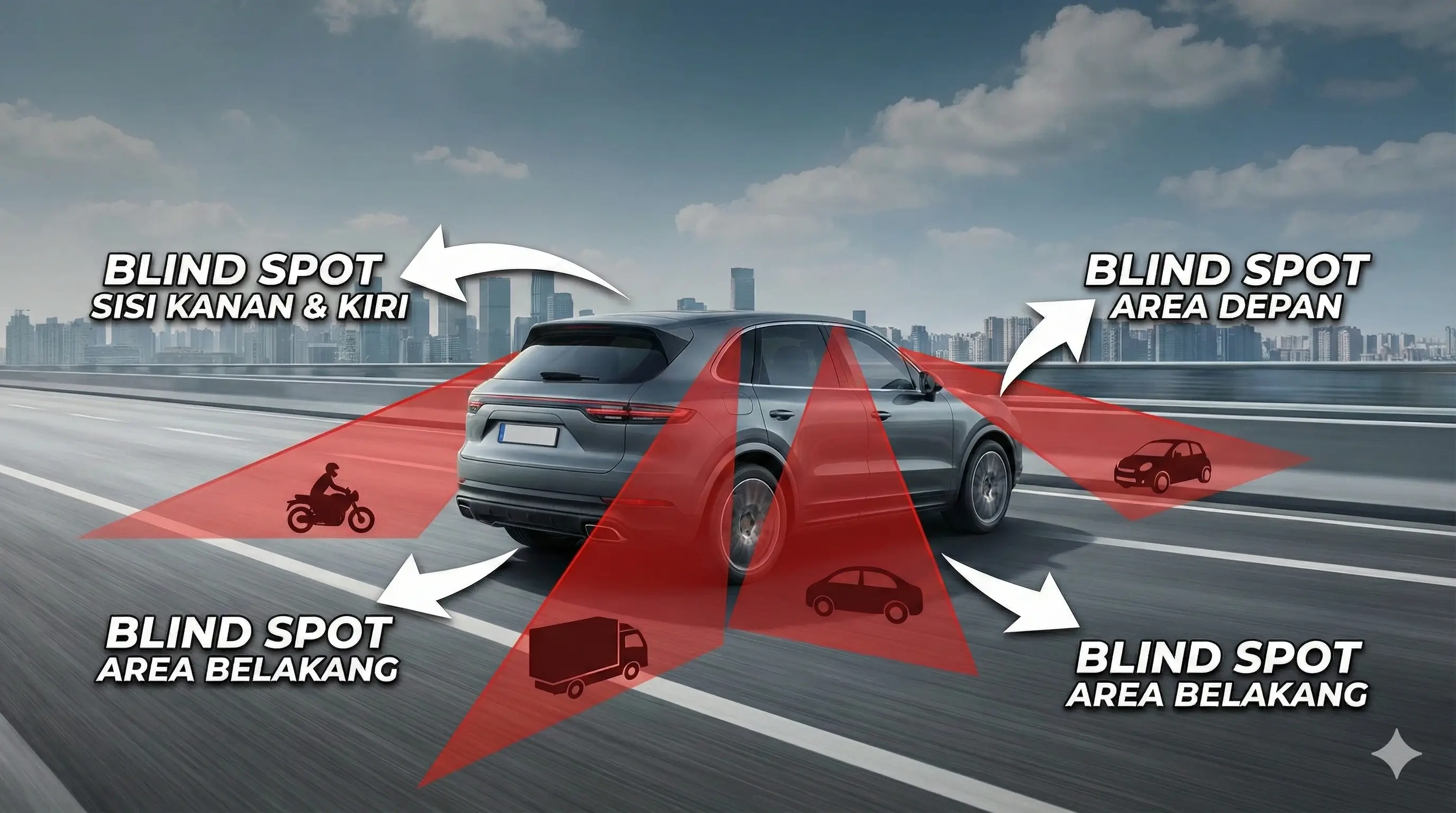
Simply put, a blind spot is an area around the vehicle that cannot be seen by the driver, either through direct vision or through the help of mirrors (rearview, right, and left).
Every type of vehicle has different blind spot areas. The larger the vehicle dimensions (such as trucks or buses), the wider the blind spot area. However, passenger cars like MPVs and SUVs also have crucial blind spots.
3 Most Common Blind Spot Locations on Cars
Know your invisible enemy. Here are the three main areas that often escape monitoring:
1. Rear Side (Right & Left)
This is the most classic area. Side mirrors have a limited viewing angle (usually only covering about 15-20 degrees). There is a space gap between the reach of the side mirrors and your peripheral vision. It is in this gap that overtaking motorcycles or cars often "disappear" for a moment before appearing beside your front window.
2. A-Pillar (Front Right & Left)
The A-Pillar is the post supporting the windshield. on modern cars, A-pillars are often made thick for safety factors (supporting the roof during rollovers). However, this thickness can block the driver's view of pedestrians or motorcycles crossing when the car is turning at an intersection.
3. Directly Behind the Car
When reversing the vehicle, the area right below the rear window is a blind spot, especially on low Sedan types or high SUVs. Small objects like children, pets, or short poles are often invisible from the center rearview mirror.
Strategies to Reduce Blind Spot Risks
Although blind spots cannot be physically eliminated 100%, you can minimize the risk with the following techniques:
- Adjust Mirrors Correctly: Open your side mirrors as wide as possible until your own car body is barely visible. This will expand the viewing range to the side area.
- Do a "Shoulder Check": Before changing lanes, make it a habit to turn your head briefly (glance) towards your shoulder (right/left) to ensure the side area is truly empty.
- Honk/Flash Lights: When overtaking large vehicles, give a signal so other drivers are aware of your presence.
- Don't Linger in Others' Blind Spots: Avoid driving parallel right beside the rear of another car for a long time. Overtake immediately or keep a distance behind.
"Third Eye" Technology in the Modern Era
Good driving techniques are indeed crucial, but human error can still occur due to fatigue or momentary negligence. This is where the role of modern automotive technology becomes very vital.
Car manufacturers are now embedding active safety features that function as the driver's "third eye." This feature is known as BSD (Blind Spot Detection), which is part of the ADAS (Advanced Driver Assistance Systems).
Smart Solutions from Chery
This system works using radar sensors on the rear bumper that continuously scan the vehicle's side area. If an object (motorcycle/car) enters the blind spot zone while you turn on the turn signal or intend to turn, the system will provide a warning in the form of a flashing light on the mirror or an alarm sound.
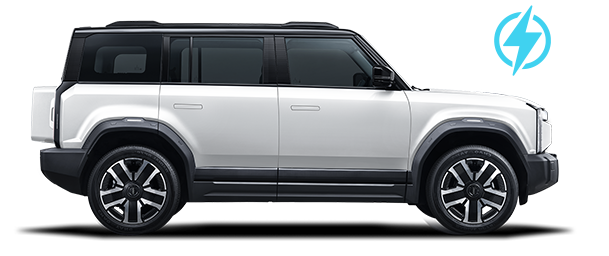
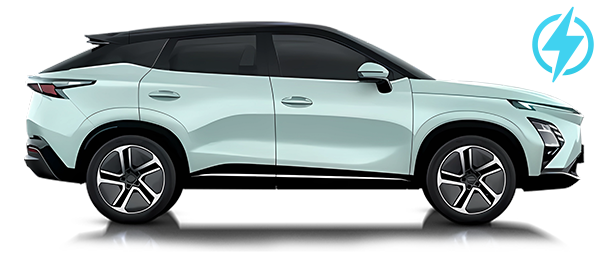
You can find this comprehensive protection technology in Chery's premium SUV line, such as:
- Chery Tiggo 8 CSH: Designed as a 7-seater family SUV, the BSD feature on the Tiggo 8 provides extra peace of mind when taking the family across crowded toll roads.
- Chery Omoda C5: With a futuristic crossover design, the Omoda C5 completes its driving style with a complete ADAS system, ensuring every lane-change maneuver is done safely and precisely.
Conclusion
Blind spots are real threats on the road that are often realized only at the last second. The combination of driver awareness (through mirror adjustment and shoulder checks) with the help of advanced safety technology is the key to achieving zero accidents.
Driving is not just about looking forward, but being aware of what is happening around us. Stay alert and prioritize safety.
Disclaimer: ADAS safety features are driving aids. The driver remains fully responsible for controlling the vehicle and monitoring surrounding conditions.