The hybrid car trend in Indonesia continues to grow, and Chery Indonesia is strengthening the electrification market with the launch of the Chery Tiggo 8 CSH. This premium PHEV SUV combines battery power and fuel in an integrated system.
Unlike fully electric vehicles that rely entirely on batteries, a PHEV such as the Tiggo 8 CSH offers a more flexible driving format. You can drive in full electric mode when the battery is charged, while still having a gasoline engine as backup power whenever needed. This results in greater energy efficiency compared to conventional gasoline cars without the usual range anxiety associated with EVs.
This is why the battery and fuel system in a PHEV cannot be seen as “backup for one another.” Both are part of a unified ecosystem. The battery provides maximum efficiency at low speeds and in stop and go situations common in urban areas. Meanwhile, gasoline maintains strong performance and consistent cruising distance during long trips. Because both are equally important, this article explains how the Tiggo 8 CSH’s battery and fuel system work together, and why they are the core value of a modern PHEV.
Understanding PHEV Technology as a Collaboration between Battery and Fuel
PHEV or Plug-in Hybrid Electric Vehicle is a car that combines an electric motor and a large battery with a gasoline engine. Unlike a standard hybrid (HEV) that cannot be charged from an external power source, a PHEV can be charged directly through external electricity. This allows users to drive in full EV mode when the battery is full.
In real world situations, the system chooses the most efficient power source depending on conditions. At low speeds or during city driving, the electric motor usually works on its own. During long trips that require more power, the gasoline engine activates to maintain stable performance.
With this operating method, a PHEV is not only fuel efficient but also delivers performance similar to a large-capacity SUV. A PHEV does not operate by “replacing gasoline with a battery.” Instead, both power sources work together to support each other, allowing efficiency and performance to be achieved simultaneously.
Also Read: Complete Guide to Choosing a Chery Car: Between EV, Hybrid, and Conventional Engines
Why the Battery and Fuel System are Equally Important in the Tiggo 8 CSH
This year, the Tiggo 8 CSH secured at least 2,500 SPK, making it the best-selling PHEV in Indonesia. One of the biggest advantages for consumers is its combination of an electric motor, battery, and gasoline engine. So how does this powertrain make the Tiggo 8 CSH stand out? Let’s break down the key value points below.
1. The Battery as the Main Power Source for Daily Use
In daily driving dominated by stop and go movement, the battery becomes the primary source that drives the Tiggo 8 CSH like a full EV. This creates smoother, lighter, and more energy-efficient driving.
The vehicle uses an 18.3 kWh Lithium Iron Phosphate (LFP) battery that provides up to about 90 km of full electric range without using fuel. For most urban drivers, this distance often covers office commutes and daily activities within the city.
Charging is also flexible. You can use a portable charger plugged into a home outlet, a wall charger which takes about 3 hours to fully charge, or DC fast charging CCS2 which takes about twenty minutes to charge from 30 percent to 80 percent.
In short, the battery is not a “hybrid add-on.” It is the foundation that enables the Tiggo 8 CSH to function like an EV without limiting your daily routines. It directly matches the needs of modern consumers who want low operating costs and reduced emissions without changing their driving habits.
2. Gasoline as an Extended Range and Power Booster
However, the battery alone cannot support all driving situations in Indonesia. For long-distance routes, higher speeds, or extended travel, fuel becomes essential to keep the vehicle powered without needing to stop for charging.
The 1.5T turbo engine can drive the wheels directly while also recharging the battery when needed. This means drivers don’t have to worry about range anxiety like in a fully electric vehicle. The 55 liter fuel tank offers complete flexibility for intercity travel, road trips, or holiday journeys without relying solely on charging stations.
With this mechanism, gasoline does not compete with the battery. Instead, both work as partners to ensure the SUV retains strong power, especially for overtaking, climbing, or maintaining constant speed on highways.
3. The Synergy of Both Power Sources Creates a More Natural Driving Experience
The strength of a PHEV lies not only in having two power sources but also in the intelligent system that decides which one should be prioritized. The Tiggo 8 CSH features an energy management system that reads road conditions, torque demand, and driving style.
At low speeds or in heavy traffic, the electric motor takes over because it is the most efficient option. When the vehicle needs a burst of power, for example during overtaking, the gasoline engine and electric motor work together to deliver high combined torque.This combination feels natural. The transition does not feel forced or abrupt. Instead, the system adjusts seamlessly.
There are intelligent drive modes that automatically select the most suitable mode. These include full EV mode, combined hybrid mode, and Smart mode that lets the system manage everything. This is why a PHEV is not “halfway electric.” It is a logical driving solution for everyday conditions in Indonesia.
4. Energy Efficiency and Environmental Impact Become More Manageable
The combination of a battery and gasoline in a PHEV offers significant environmental value when driven correctly. A study in Environmental Science and Technology (2020) found that PHEVs can reduce climate impact by up to 43 percent depending on the owner's charging habits. This means the more you charge and drive in electric mode, the higher the efficiency and emission reduction.
Local research also supports this. A study titled “The Effect of Environmental Concerns on Electric Car Market in Indonesia” (BRCS, 2023) found that EVs including PHEVs can reduce CO₂ emissions by up to 50.6 percent, aligning with reduced oil consumption and positive ecological impact. Another study from Souma (JEBeR, 2025) explained that EV adoption significantly improves urban air quality.
For Indonesia, where charging infrastructure is still developing, a PHEV like the Tiggo 8 CSH is the most logical transition toward high efficiency, low emissions, and long-range flexibility.
How the Hybrid System Works in the Tiggo 8 CSH
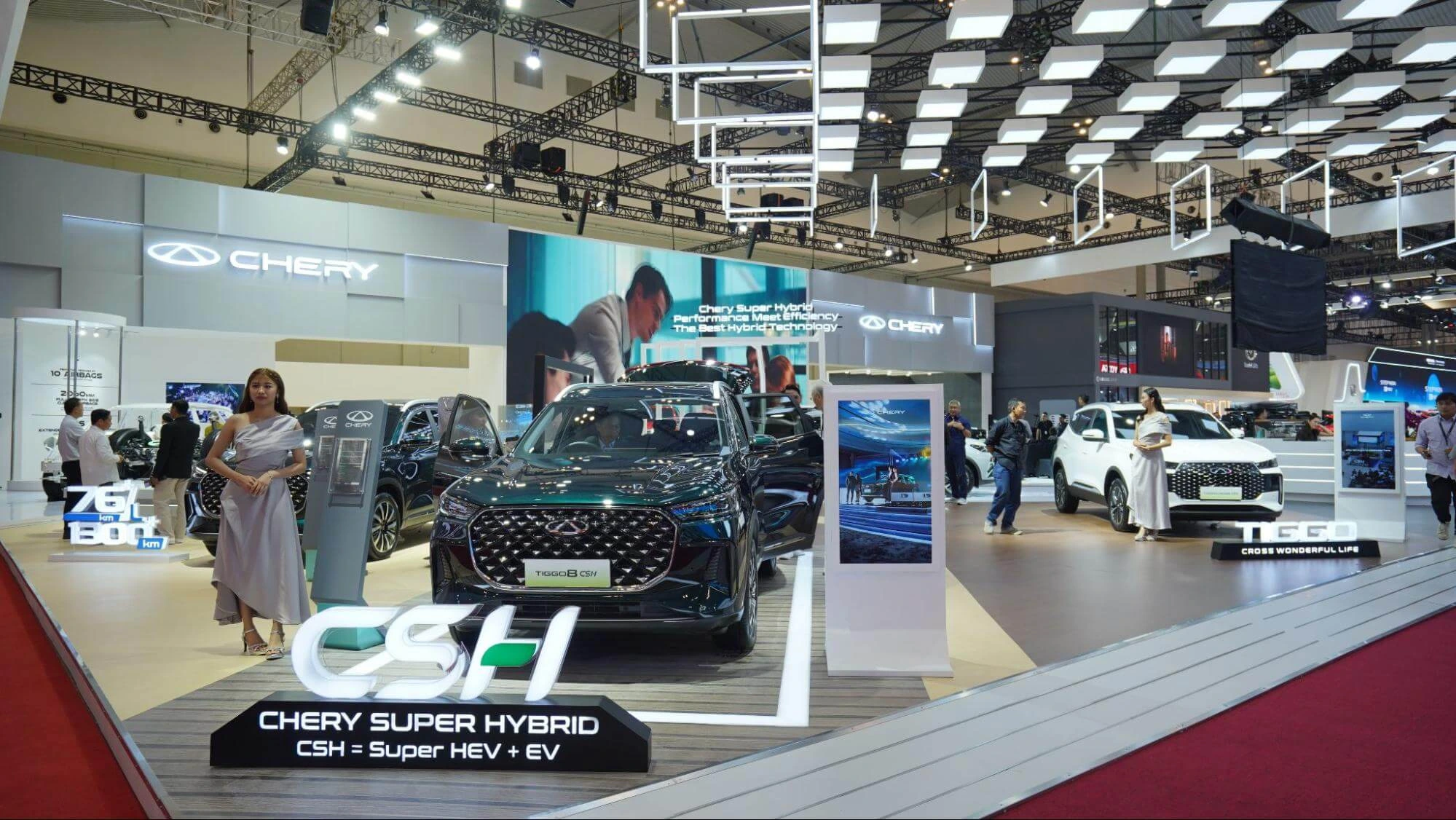
The PHEV system in the Tiggo 8 CSH is known as Chery Super Hybrid or CSH. This technology is not simply a hybrid system with a larger battery. It consists of three core components that work as one.These are the Dedicated Hybrid Engine (DHE), the Dedicated Hybrid Transmission (DHT), and the Dedicated Hybrid Battery (DHB).
All three components are designed to support each other. The DHE, DHT, and DHB deliver power in a natural flow, avoiding the forced feeling found in some hybrid systems. A simple illustration is as follows. The DHB (battery) provides energy to the DHT (transmission), which then assists the DHE (engine) whenever necessary. The result is quicker acceleration, easier torque delivery, and better overall energy efficiency compared to a conventional gasoline car.
From all the points discussed above, the battery and fuel system in the Tiggo 8 CSH operate as a unified pair that strengthens one another. If you want to experience the character and value of the Tiggo 8 CSH PHEV for yourself, we recommend scheduling a test drive at the nearest authorized dealer in your city. Check the complete dealer locations here.