For a driver, the gear shift lever (transmission) is like a conductor's baton in an orchestra. It functions to regulate the rhythm of engine power to match the vehicle's speed requirements. Choosing the wrong gear not only makes the car feel heavy or "roar" excessively, but can also damage engine components in the long run.
In the modern era, gear shift designs are becoming increasingly diverse. Ranging from conventional stick models and rotary knobs to electronic levers. However, regardless of the shape, the letter and number codes displayed have universal functions that must be understood for driving safety.
Here is a thorough breakdown of the code meanings on Manual and Automatic car gear shifts.
1. Manual Transmission: The Art of Managing Rotation
In manual cars, the driver has full control. The commonly used pattern is the "H-Pattern" with numbers 1-5 (or 6) and R.
- 1st Gear (Start & Steep Inclines): Has the largest torque (turning power) but low speed. Only used to start moving the car from a standstill or tackling extreme inclines.
- 2nd & 3rd Gear (Acceleration): Used to increase speed within the city (20-50 km/h).
- 4th & 5th Gear (Cruising): These gear ratios are designed for high speeds with low engine RPMs to save fuel.
- R (Reverse): Reverse gear.
- N (Neutral): The position where the engine is disconnected from the wheels. The car can be pushed. Mandatory use when stopped for a long time.
2. Automatic Transmission: Coded Convenience
Automatic cars are more popular in urban areas because they are practical. However, the row of letters on the lever often confuses beginners. Let's translate them:
Main Codes (Must Know)
- P (Park): Parking lock. The transmission is mechanically locked so the wheels cannot turn. Mandatory use when the car is parked and the engine is turned off.
- Tip: Never shift to P while the car is still moving, as it can strip the transmission gears.
- R (Reverse): Reverse. Reverse lights and parking sensors/cameras will activate automatically.
- N (Neutral): Free gear. Used when stopping briefly (traffic lights) or when the car needs to be towed.
- D (Drive): Drive forward. This is the "set and forget" position. The car's computer will automatically regulate gear shifting from 1 onwards according to the throttle input.
Additional Codes (Special Features)
- S (Sport): Aggressive mode. Gear shifting is done at higher engine revolutions (RPM). The result is a more responsive and powerful car, but fuel consumption is slightly more wasteful.
- L / 1 (Low): Low gear locked. The car will be held in 1st gear only. Very important to use when going down steep slopes as engine braking so the brakes don't fail, or when climbing extreme hills.
- 2 / D3: Limits the transmission only up to gear 2 or 3. Suitable for moderate inclines or winding mountain roads.
- M (+/-): Manual Mode / Tiptronic. Gives the sensation of shifting gears manually on an automatic car (without a clutch).
Gear Lever Evolution: From Mechanical to Electronic
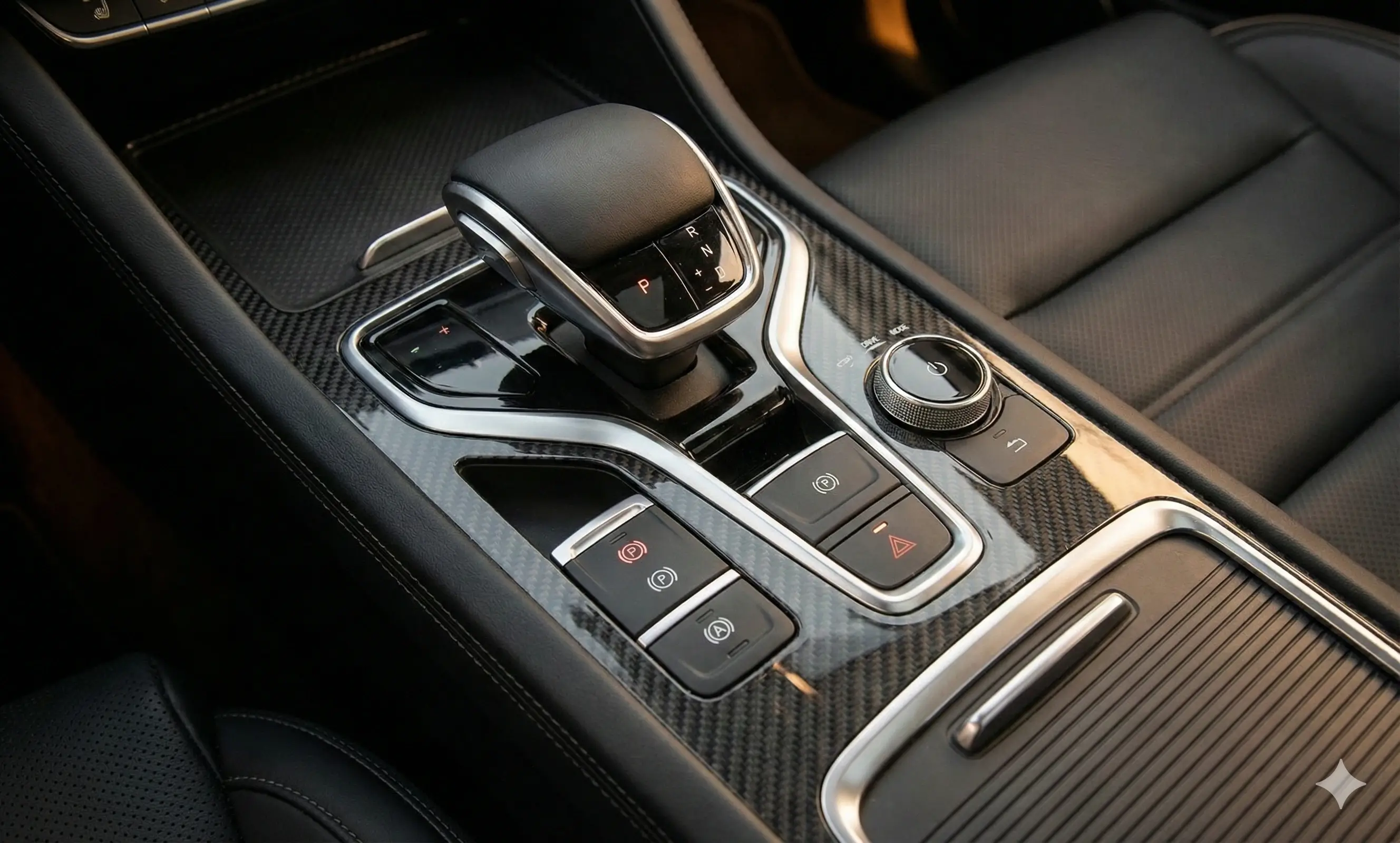
Automotive technology continues to move forward. While gear levers used to connect to the transmission using physical steel cables, modern cars now use the Shift-by-Wire system. Gear shift signals are sent electronically.
This change allows car interior designs to become more futuristic, spacious, and minimalist, as applied to the Chery vehicle line.
Modern and Sporty Style
In the Chery C5, the gear shift lever is designed with an ergonomic E-Shifter style, resembling an aircraft throttle. This design is not only aesthetic but also precise. Drivers can easily switch from D (Drive) mode to Manual mode to feel a sporty sensation while pumping adrenaline on the freeway.
Conclusion
Understanding the meaning of every letter and number on the gear shift lever is the foundation of driving safety. Using the right gear in the right situation such as using low gear (L) on sharp descents not only extends the life of transmission components but can also save lives.
Whether you are a fan of conventional sporty levers or the practicality of modern electronic levers, ensure you always operate them correctly and smoothly.