Imagine you are in a hurry to go to work or want to go home after a long day of activities, but your car is hard to start. Quite panic-inducing, right?
Especially when the key is turned or the start button is pressed, the car engine just won't turn on. You only hear a "click-click" sound, the starter feels heavy, or there is even no response at all. What would you do?
Some car owners might think that their battery is dead or drained. In fact, this condition could also be a sign that the car's starter motor is starting to break down.
The problem is, starter motor damage usually doesn't cause the car to break down suddenly. Initially, the car can still start, but only after a few attempts. If this condition is left for too long, there is a high probability that the starter motor could completely die and even cause the car to break down unexpectedly.
Therefore, it is important for you to understand the signs of a broken car starter motor so you can check it sooner before the damage spreads to other components like the battery, flywheel, or the car's electrical system.
What is a Car Starter Motor?
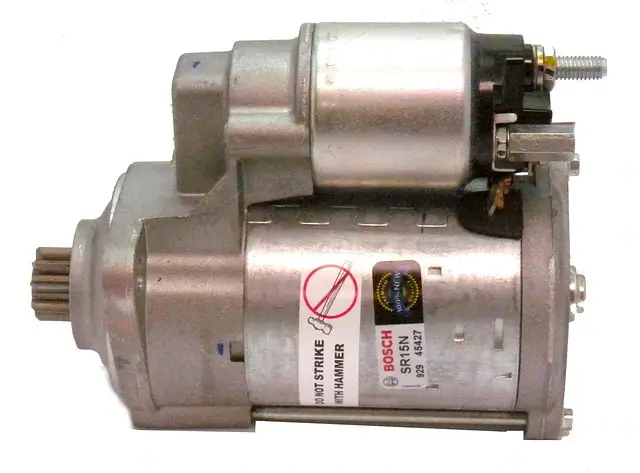
A starter motor is one of the car's electrical components that functions to rotate the engine's flywheel when the car is first started.
When you turn the ignition key or press the start button, the battery sends an electrical current to the starter motor to rotate the engine's flywheel and crankshaft until the initial combustion process occurs.
Because it works with a large electrical current and high rotation speed, the starter motor is a component that is quite susceptible to wear over time.
What Happens if the Car Starter Motor is Broken?
When the starter motor is broken, it will automatically disrupt the initial combustion process in the engine. The impact is not only making the car hard to start, but it can also affect other electrical systems.
Some of the most common impacts felt by car owners when their starter motor is broken include:
- The battery drains faster because the starter is forced repeatedly.
- A harsh noise or grinding sound appears during starting.
- The starter feels heavy or slow.
- The engine does not respond even after jump-starting the battery.
Under certain conditions, starter damage can also cause the flywheel to wear out due to abnormal friction between the starter gear and the flywheel.
Most Common Signs of a Broken Car Starter Motor
We have summarized the 5 most common signs along with their explanations to make it easier for you to recognize the signs of a problematic or even broken car starter motor.
1. The Car is Hard to Start
The first and most common sign that a car's starter motor is problematic is the car being hard to start. The engine will feel heavy when started or will only start after multiple attempts.
This symptom or sign will not occur when the car is started in the morning. The symptom actually appears more often when the engine is hot after a long trip.
The problem occurs because the condition of the coils inside the motor has started to weaken. As a result, the electrical current will not be strong enough to turn the motor when the engine is hot.
2. A "Click-Click" Sound Appears
The second sign indicating a problematic car starter motor is the appearance of a "click-click" sound.
This sound comes from the starter solenoid trying to push the pinion gear towards the flywheel, but the starter motor lacks the power to turn it.
If the sound is fast and continuous (click-click-click), it is usually an indication of a drained battery. You can jump-start the battery as a solution.
However, if the sound only occurs once every time the key is turned, it is highly likely that the carbon brushes are worn out or the solenoid switch is dirty. So you need to inspect or service the starter motor.
3. The Starter Feels Weak and Slow
A normal starter should turn the engine quickly and stably.
If the rotation sounds slow even though the battery is still good, there is a possibility of a problem with the starter motor components such as:
- The armature is weakening.
- The starter coil is problematic.
- Or the starter bearings are starting to wear out.
4. A Harsh Grinding Sound is Heard
This clattering or metal grinding sound appears when the gear on the starter motor (pinion gear) is not precise when it meets the gear on the engine (flywheel).
This sound can be a sign that the pinion gear or flywheel is experiencing wear.
If left too long, the flywheel teeth can chip off, and the engine overhaul cost to replace the flywheel is much more expensive than just servicing the motor.
5. A Burning Smell is Detected
This burning smell usually appears because you forced the car engine to start for too long (more than 5 seconds) when the car was hard to start.
The starter motor works with a very large electrical current. So, forcing it to work continuously will burn the cable insulation inside it.
How to Tell the Difference Between a Dead Battery and a Broken Starter Motor
A dead battery and a broken starter motor both make the car hard to start. Therefore, we have summarized the differences between these two problems in the table below.
Here are the differences:
| Symptom | Dead Battery | Broken Starter Motor |
| Dashboard Lights | Dim | Remain bright |
| Horn | Weakens | Normal |
| Starter Sound | Weak | Click-click |
| Engine Started | Completely heavy | No response |
| Starter after jump-start | Usually normal | Remains problematic |
If the dashboard lights are still bright but the starter is not working normally, the problem most likely comes from the starter motor.
How to Check a Car Starter Motor Yourself at Home
Before taking your car to a repair shop, there are several inspection steps you can do yourself.
1. Check the Condition of the Dashboard Lights
If the dashboard lights immediately completely turn off or dim during starting, the problem is likely caused by:
- Loose battery terminals.
- Problematic ground cable.
- Internal starter short.
- Partially dead battery.
If the lights remain bright but the engine doesn't react, the problem is most likely in the starter motor.
2. Check the Battery Terminals
Battery terminals that are dirty, moldy, or loose can obstruct the flow of electricity to the starter.
Try wiggling the battery cables with your hand. If they can turn or wobble, tighten the bolts.
If there is white mold or corrosion on the battery terminals, clean it using warm water or a battery terminal cleaner fluid, then dry it before reattaching.
3. Listen to the Starter Sound
This step will make it easier for you to determine which component has failed inside the starter unit.
Here are the characteristics of the starter sound and the likely components causing it.
Single click: A single click sound usually indicates the starter solenoid is still working, but the starter motor fails to turn. The cause could be worn carbon brushes, a jammed starter motor, or an unstable power supply.
Fast/repeated click: This repeated click or "click-click" sound is usually caused by a battery that is not strong enough to hold the solenoid load. The battery still has a little power to push the solenoid (the first "click" sound). But when the starter motor starts asking for a large current to turn the engine, the battery voltage immediately drops. Because the voltage drops, the solenoid releases again (the second "click"). Then, because the load is gone, the battery voltage rises again and pushes the solenoid again. This process repeats very quickly, creating a continuous sound.
Whining sound (like an electric drill): The motor is spinning but the pinion gear is not extending to turn the engine, creating a whining sound. This is usually caused by a slipping bendix, a broken overrunning clutch, or the pinion failing to engage with the flywheel.
Grinding/scraping sound: A grinding or metal scraping sound usually indicates the starter gear and flywheel are worn or no longer precise when connecting with each other.
4. Pay Attention to Symptoms When the Engine is Hot (Heat Soak)
If the starter is heavier when the engine is hot but normal when cold, there is likely a problem with the starter's internal coils.
Internal starter components that are aging will experience expansion when hot. Weak copper coils will increase their resistance at high temperatures, causing the starter motor's power to plummet drastically.
Can a Car Starter Motor Be Repaired?
The good news is, most starter motor damage can still be repaired without having to replace the entire unit.
Technicians will usually check the condition of starter motor components such as:
- Carbon brushes,
- Starter solenoid,
- Bendix,
- Armature,
- Bearings,
- And starter coils.
If the damage is still minor, the worn components can be partially replaced, making the service cost more economical.
However, if the starter coil is burned or the housing is severely damaged, replacing it with a new unit is usually more recommended.
Estimated Car Starter Motor Service Cost
Starter motor repair costs depend on the car type and the extent of the damage.
Here is a general range of service costs for starter motor components:
| Type of Repair | Estimated Cost |
| Service carbon brush | Rp150,000–300,000 |
| Service starter bendix | Rp300,000–700,000 |
| Replace starter solenoid | Rp400,000–Rp1 million |
| Replace starter assy | Rp1.5–4 million |
Starter motor service costs for premium cars or cars with push-start systems are usually higher than for conventional cars.
Important Note: The costs above can be lower or higher depending on the service fee and spare parts prices at the car repair shop you choose.
Common Mistakes Made When the Car is Hard to Start
There are at least 3 common mistakes made when facing a car that is hard to start. Here we summarize them for you.
Forcing the Starter for Too Long
The starter should not be used for more than 5-10 seconds in one attempt.
If forced continuously, the insulation on the copper coils risks melting and causing an internal short circuit (burnt coil).
Wait at least 15-30 seconds between attempts to allow time for the components to cool down. Then do the self-inspection using the methods above.
Immediately Replacing the Battery
Replacing the battery without knowing the main cause of the car being hard to start will cost you multiply.
We have summarized the differences between a dead battery and a broken starter motor in the table above. So, you can handle the problem of a car being hard to start correctly.
Randomly Hitting the Starter Motor
Some people try hitting the starter motor using a hard object so the car can start temporarily.
Hitting the starter motor is indeed a popular emergency technique (often called a hammer test), but the risk is high on modern cars.
Many modern starter motors use permanent magnets. If you hit it too hard or in the wrong spot, the magnet can crack or break. If the magnet breaks, the starter motor can no longer be repaired and you have to replace the whole unit.
How Long is the Lifespan of a Car Starter Motor?
The average lifespan of a starter motor ranges from 5 to 10 years, depending on car usage.
In terms of mileage, the starter motor's service life is generally around 100,000–150,000 kilometers.
However, the lifespan of a starter motor can be shorter if:
- The car is frequently flooded.
- The battery is frequently dead.
- The car is frequently turned off and on in a day.
- Or the starter is frequently forced for too long.
How to Prevent the Starter Motor from Breaking Quickly
Keeping the starter motor in good condition so it doesn't break quickly is actually quite simple.
Several steps below can help extend the life of your starter motor, including:
- Keeping the battery condition stable (Voltage & Amperage).
- Not forcing the starter for too long.
- Cleaning the battery terminals.
- Avoiding the car from getting flooded.
- Performing regular servicing.
In addition, if the starter motor starts showing abnormal symptoms, immediately perform the inspection steps mentioned above before the damage becomes more severe.
Conclusion
The starter motor is one of the important components that help start the car engine. When this component starts to break, the car usually shows several symptoms such as a heavy starter, a "click-click" sound, a harsh noise, or the engine being hard to start.
Most starter damage can actually still be repaired if handled early. Therefore, it is important to understand the early signs of damage so the car doesn't break down unexpectedly on the road.
With the right diagnosis, routine maintenance, and proper use of the starter, the life of a car starter motor can last quite a long time and continue to work optimally.
Get more useful information about car maintenance tips and tricks only at chery.co.id.
FAQs About Car Starter Motors
Can a broken starter motor cause the battery to drain quickly?
Yes. A problematic starter can draw excess electrical current, causing the battery to drain faster.
Can the car still start if the starter motor is broken?
It depends on the extent of the damage. In the early stages, the car can usually still start after a few attempts. However, if the starter is completely dead, the engine will not be able to start.
Why is the starter normal when the engine is cold but heavy when hot?
This condition is often caused by the coil resistance increasing when the temperature is hot, so the starter's electrical current weakens.
Does frequent start-stop make the starter break quickly?
Yes. Cars frequently used in traffic jams with a high start-stop frequency make the starter work harder compared to normal use.