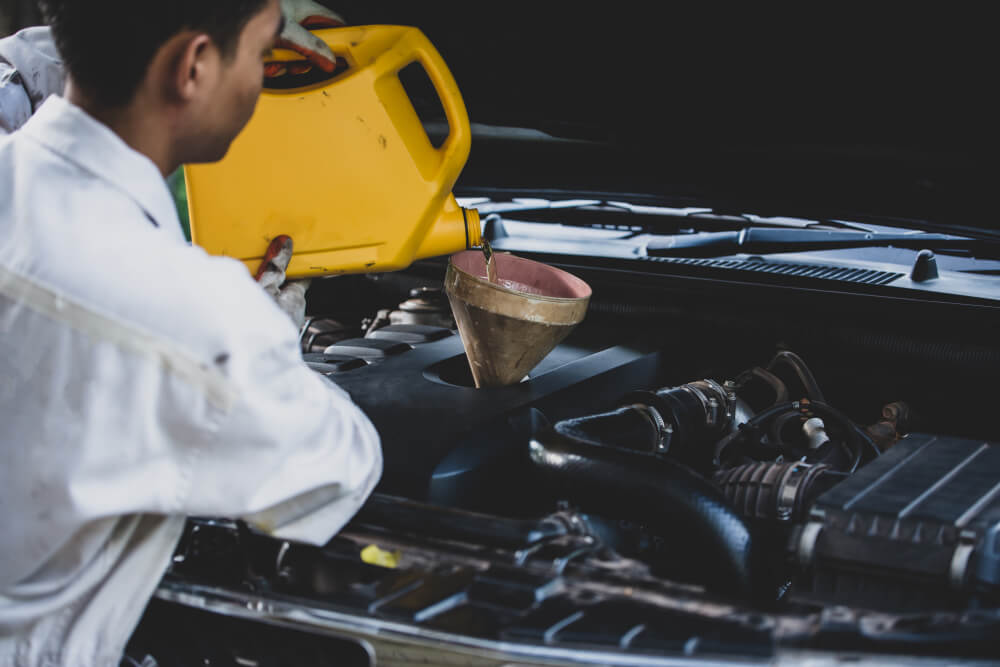
If you think that the ideal time to change your car engine oil is every 10,000 kilometers, you are not wrong.
But have you ever considered changing the engine oil earlier because your car is frequently stuck in traffic, experiences a lot of stop-and-go driving, or is often exposed to hot temperatures?
Because in fact, besides mileage, the decline in car engine oil quality can also be influenced by the daily usage conditions of the car.
Therefore, understanding when to change engine oil is not just about looking at the mileage. Furthermore, you also need to understand:
- the vehicle's usage conditions,
- the type of oil used,
- the duration of use,
- and the signs of oil degradation.
This article will give you broader insights into car engine oil change schedules. Besides based on mileage and time, we will also provide signs that the oil needs changing, estimated costs, and how to choose the right oil to keep your car engine durable.
Why is Engine Oil So Important for Cars?
Before discussing the oil change schedule, we must realize together that engine oil plays a crucial role in a car's operation.
Fundamentally, engine oil functions as a lubricant between metal components inside the engine. When the engine is running, components like the piston, crankshaft, camshaft, and valve train move at high speeds and temperatures. If not properly lubricated, these engine components will potentially overheat and wear out faster due to friction with each other.
Moreover, in modern car engines, oil also functions to:
- help cool the engine,
- clean combustion residue,
- prevent sludge or deposits,
- protect components from corrosion,
- maintain sealing between the piston and cylinder,
- and aid fuel efficiency.
When oil quality begins to decline, you will feel the engine pull heavier, and fuel consumption will even become more wasteful.
How Long Should Car Engine Oil be Changed?
Based on its type, it is recommended to change car engine oil every:
- 5,000 kilometers for mineral oil,
- 7,500 kilometers for semi-synthetic,
- 10,000 kilometers or more for full synthetic,
- or about every 6 months if the mileage has not been reached.
However, you need to understand that the numbers above should be used as a maximum mileage reference for changing car engine oil. Because, we need to consider the car's usage conditions, especially in Indonesia.
This means that even if the mileage is not high, the oil quality can drop faster depending on the car's driving environment.
Why Do Cars in Indonesia Often Need Faster Oil Changes?
In some cases encountered by mechanics, car oil darkens faster and even decreases significantly even though it has only been used for a few thousand kilometers.
The cause stems from daily vehicle usage patterns. Conditions such as:
- long traffic jams,
- prolonged idling,
- repeated short-distance trips,
- stop and go,
- big city heat,
- frequently passing through floods,
- carrying heavy loads,
- or frequently going uphill.
Under these conditions, the engine works more often in unstable temperatures. The oil also gets contaminated faster by combustion residue, oxidation, water vapor, and fuel dilution or the fuel mixture entering the oil.
Therefore, cars used daily in big cities like Jakarta, Surabaya, Bandung, or Medan require faster oil change intervals compared to vehicles used on toll roads or stable out-of-town trips.
This is why most mechanics still recommend changing the oil every 5,000 - 7,000 kilometers for daily city driving even if the car uses synthetic oil.
Do Rarely Used Cars Still Need Oil Changes?
Yes. Cars that are rarely used still need periodic oil changes even if the mileage has not reached the 5,000 - 7,000 kilometers multiple. Because, the oil will still experience a decline in quality due to:
- oxidation,
- temperature changes,
- water vapor contamination,
- condensation,
- and a decrease in the additive package in the oil.
Cars left idle for too long actually risk experiencing moisture buildup inside the engine. If left too long, this condition can trigger internal sludge and corrosion.
Therefore, most oil manufacturers still recommend an oil change at least every 6 months even if the car is rarely used to maintain the health of your car engine's internal components.
Is it Okay to Change Car Oil Every 3 Months?
It is okay. Even for some conditions like daily operational cars frequently caught in repeated traffic jams, changing the oil every 3 months even if the mileage hasn't reached the 5,000 - 7,000 kilometers multiple can maintain the health of the engine's internal components.
Conversely, if your car uses high-quality full synthetic oil, is rarely caught in traffic jams, and the daily mileage is under 50km, changing the oil too quickly does not actually provide significant benefits.
This is important for you to understand because over-maintenance can also make vehicle maintenance costs inefficient.
The most important thing is not how often you change the oil, but whether the replacement interval matches:
- oil specifications,
- usage conditions,
- and vehicle manufacturer recommendations.
Signs Your Car Engine Oil Needs Changing
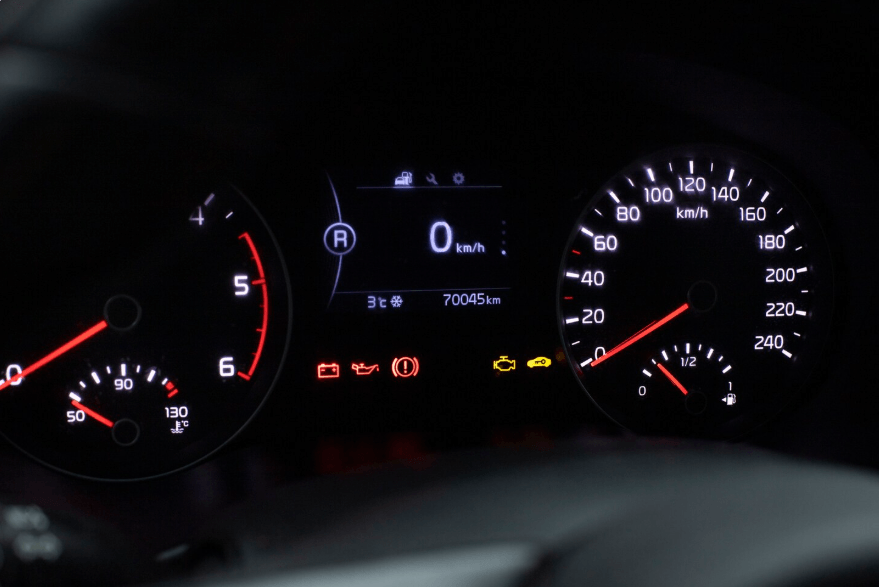
Besides following mileage and time, you also need to understand the signs when the oil quality begins to decline.
One of the most common signs you can feel is the engine sound becoming rougher than usual. This happens because the lubricating layer begins to lose its ability to protect engine components from friction.
Car acceleration can also feel heavier. The engine feels like it's losing power because the friction between internal components is not smooth and unresponsive.
In some cases, fuel consumption also becomes more wasteful because the engine works harder due to declining oil quality or even volume.
Additionally, the color and texture of the oil can also be important indicators. New oil is usually brownish-yellow and relatively clear. Over time, the oil color will change to a darker black as it collects dirt from combustion.
However, it's important to understand that black oil does not necessarily mean it needs immediate replacement. In fact, the black color often indicates that the detergent additive in the oil is still working to clean the engine.
What needs attention is when:
- the oil is too thin,
- too thick,
- sludge or mud appears,
- a burning smell is detected,
- or the oil volume begins to drop drastically.
If the car is equipped with an oil life monitor or an oil indicator on the dashboard, immediately perform an inspection when the indicator light turns on.
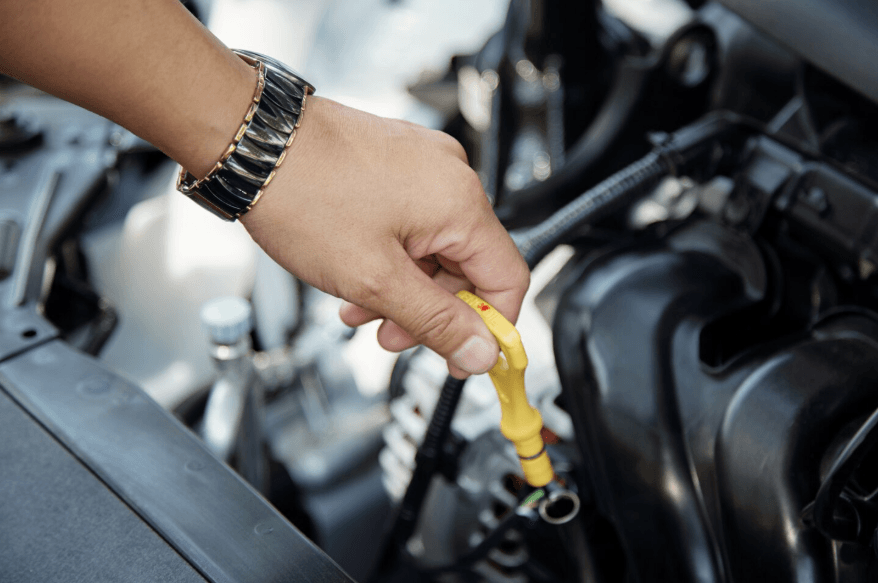
But if not, you can use a dipstick to check the volume and color of your car's engine oil.
Tips for using a dipstick: Before checking the volume and color of your engine oil, clean the dipstick first using a dry tissue. Once clean, insert the dipstick back into its hole to measure the volume and color of your engine oil.
How to Read Car Oil Specifications so You Don't Choose Wrongly
If you are still confused about how to read car oil specifications, here is a simple way you need to remember to read them.
For example:
SAE is the oil viscosity standard set by the Society of Automotive Engineers.
These numbers indicate the viscosity level of the oil under two different temperature conditions.
- 10W (W = Winter / cold temperature)
- The oil will be thin enough when the engine is first started. Thus, the oil circulates quickly and the engine components are immediately lubricated.
- 40 (working temperature / hot)
- The oil is thick enough when the engine runs until it's hot. With a thick condition, the oil layer on the components remains stable, preventing excessive friction between components.
Besides SAE, there are also API standards such as:
- API SN,
- API SP,
- API CK-4 for diesel.
The newer the API standard, generally the better its protection capability against deposits, oxidation, and engine wear.
Therefore, do not just choose oil based on brand or price. Ensure the specifications match your vehicle manufacturer's recommendations.
Furthermore, you can read the Guide to choosing the right car oil so the engine stays durable by clicking here.
Is Automatic Car Engine Oil the Same as Manual Cars?
For engine oil, manual and automatic cars can basically use the same specifications if the engines are identical.
What is actually different is the transmission oil.
Manual cars use manual transmission oil. While automatic cars use ATF or CVT fluid which has different lubrication and hydraulic pressure characteristics.
Therefore, do not confuse:
- engine oil,
- manual transmission oil,
- and automatic transmission oil.
Using the wrong transmission oil can cause rough gear shifting to transmission damage.
How Much Does a Car Engine Oil Change Cost?
Car oil change costs highly depend on:
- the type of oil,
- engine capacity,
- the number of liters of oil,
- the type of vehicle,
- and the service location.
As a general overview:
| Vehicle Type | Oil Capacity | Estimated Cost |
| City Car | 3–4 liters | Rp300,000–Rp700,000 |
| MPV | 4–5 liters | Rp500,000–Rp1 million |
| SUV Turbo | 5–6 liters | Rp800,000–Rp1.5 million |
These costs usually include:
- the oil filter,
- service fee,
- and replacing the oil drain plug washer.
Turbo or direct injection cars generally require synthetic oil with higher specifications, making the replacement cost more expensive.
Important Note: The prices above are subject to change at any time due to economic and geopolitical conditions that may influence them.
Should the Oil Filter be Changed When Changing Oil?
Ideally, yes. The oil filter functions to filter dirt and metal particles from the engine oil circulation. If the filter is too dirty, oil flow can be disrupted, and lubrication capability decreases.
Some workshops might recommend you change the filter every two oil changes. However, replacing the filter during every oil service is actually safer to maintain the cleanliness of the lubrication circulation in your car's internal engine.
Conclusion
Determining a car oil change schedule cannot solely be based on mileage numbers. Road conditions, vehicle usage patterns, oil types, to the tropical climate in Indonesia also heavily influence the lifespan of engine oil.
Under normal use, oil is generally changed every 5,000–10,000 kilometers or about once every 6 months. However, for cars frequently stuck in traffic, stop and go, or repeated short trips, the oil change interval can be faster.
Besides following the service schedule, vehicle owners also need to understand the signs of declining oil quality such as rough engine sound, heavy acceleration, increased fuel consumption, to the appearance of sludge in the oil.
Changing the oil on time is much cheaper than repairing engine damage caused by poor lubrication. Therefore, use oil with specifications that match the manufacturer's recommendations and perform routine checks so the engine performance remains optimal in the long run.
Get more useful information about car maintenance tips and tricks only at chery.co.id.