
Explanation of Car Clutch Functions and How It Works-image
tips and tricks
04 January 2026

Explanation of Car Clutch Functions and How It Works

For drivers of manual cars, the leftmost pedal is a "close friend" that determines the smoothness of the ride. However, even for automatic car users, the clutch system remains a vital component working automatically beneath the hood.

We often hear terms like "worn clutch lining" or "burnt clutch smell," but what is the actual role of this component? Why can a car engine keep running when stopped, even though the wheels aren't turning? The answer lies in the Clutch system.

Let’s dissect the anatomy and working mechanism of the component that serves as the "gatekeeper" of engine power.

Primary Function of the Clutch: The Mediator

Simply put, the clutch functions as a disconnector and connector of power flow (torque) from the engine to the transmission (gears).

Imagine the car engine as a fan spinning rapidly. If you wanted to change the blades while the fan was still spinning, your hand would surely get injured. You need to turn off or disconnect its rotation for a moment, right?

That is the function of the clutch. It allows you to:

  1. Change Gears: Briefly disconnect power flow so that transmission gear shifts can be done smoothly without a "grinding" noise.
  2. Stop Without Killing the Engine: Separate the engine rotation from the wheels, so that at a red light, the engine remains alive (idling) even though the wheels have stopped completely.
  3. Smooth Initial Start: Connect the engine's rotating power to the stationary wheels gradually so the car doesn't jerk or jump when it starts moving.

Key Components in the Clutch System

This system works thanks to friction between disc components. Here are the main players:

  1. Flywheel: A heavy steel disc connected directly to the engine that spins following the engine's rotation.
  2. Clutch Disc (Friction Disc): A disc coated with friction material (like brake pads). It is sandwiched between the Flywheel and the Pressure Plate. This is the part that transmits power to the transmission.
  3. Pressure Plate: A cover that functions to press the Clutch Disc so it sticks firmly to the Flywheel.
  4. Release Bearing: A bearing tasked with pressing the spring on the Pressure Plate when the pedal is depressed.

How It Works: Press vs. Release

The clutch mechanism works counter-intuitively to what we might think.

1. When the Clutch Pedal is Pressed (Disengaged Position)

When your foot presses the pedal:

  • The release bearing presses the diaphragm spring.
  • The Pressure Plate's clamp on the Clutch Disc loosens.
  • Result: The Clutch Disc "floats" and does not touch the Flywheel. The engine keeps spinning, but power is NOT transmitted to the transmission/wheels. This is when you shift gears.

2. When the Clutch Pedal is Released (Engaged Position)

When your foot lifts off the pedal:

  • The spring pressure locks back in.
  • The Pressure Plate clamps the Clutch Disc firmly against the Flywheel.
  • Result: Because it is clamped, the Clutch Disc spins along with the engine speed. Power is TRANSMITTED fully to the transmission and wheels. The car moves forward.

Technological Evolution: From Heavy Pedals to Dual Clutch (DCT)

In the modern era, pressing a heavy clutch pedal in the middle of traffic is starting to be left behind. Automotive technology has evolved towards intelligent automatic transmissions, yet they still use the basic principles of a refined clutch.

One of the peak innovations in this technology is DCT (Dual Clutch Transmission).

As the name implies, this system uses two sets of clutches working automatically:

  • Clutch A: Controls odd gears (1, 3, 5, 7).
  • Clutch B: Controls even gears (2, 4, 6, reverse).

When you are driving in 1st gear (Clutch A active), Clutch B is already "prepared" holding 2nd gear. When it's time to shift, the system only needs to "swap roles" in milliseconds. The result? Super fast gear shifts, smoothness, and minimal power loss.

Application in Modern Vehicles

You can experience this advanced DCT technology in the Chery Tiggo Cross Sport. This family SUV utilizes a dual-clutch transmission to provide responsive acceleration while remaining fuel-efficient, eliminating the jerking symptoms usually felt in conventional automatics.

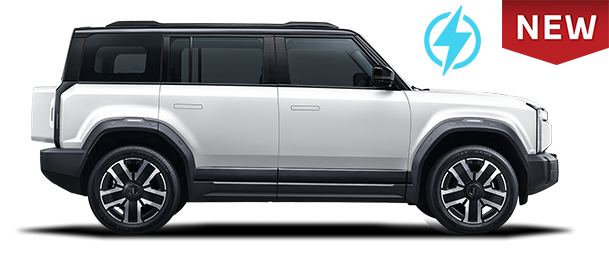
On the other hand, the electric vehicle revolution brings a completely different paradigm. Cars like the Chery J6 no longer use a multi-gear clutch system. Its electric motor delivers instant power directly (direct drive) to the wheels through a single-speed reduction gear transmission, offering absolute smoothness with no gear shift pauses at all.

Conclusion

The clutch is a vital bridge that translates raw engine power into controlled wheel movement. Whether it's a conventional manual system, advanced Dual Clutch (DCT) technology, or a direct drive system in electric cars, the goal remains the same: to provide an efficient and comfortable driving experience.

Understanding how it works helps us drive more wisely, such as not getting used to "riding the clutch" (half-clutch) so that these vital components remain durable and car performance stays prime.

Popular Products

Other Tips & Tricks

Vehicle Blind Spots That Are Often Unnoticed
Tips & Tricks
05 January 2026

Vehicle Blind Spots That Are Often Unnoticed

Have you ever experienced a situation where you wanted to change lanes on the toll road, checked your mirrors and felt safe, but suddenly heard a loud honk from the side? It turns out there was a car or motorcycle "hiding" right behind your side.

That is what is called a Blind Spot.

In traffic accident statistics, blind spots are often the main cause of side collisions and incidents when turning. This happens not because the driver is careless, but due to the physical limitations of vehicle design and the range of human vision. Understanding where these "danger zones" are located is the first step towards safe defensive driving.

What Is a Blind Spot?

Simply put, a blind spot is an area around the vehicle that cannot be seen by the driver, either through direct vision or through the help of mirrors (rearview, right, and left).

Every type of vehicle has different blind spot areas. The larger the vehicle dimensions (such as trucks or buses), the wider the blind spot area. However, passenger cars like MPVs and SUVs also have crucial blind spots.

3 Most Common Blind Spot Locations on Cars

Know your invisible enemy. Here are the three main areas that often escape monitoring:

1. Rear Side (Right & Left)

This is the most classic area. Side mirrors have a limited viewing angle (usually only covering about 15-20 degrees). There is a space gap between the reach of the side mirrors and your peripheral vision. It is in this gap that overtaking motorcycles or cars often "disappear" for a moment before appearing beside your front window.

2. A-Pillar (Front Right & Left)

The A-Pillar is the post supporting the windshield. on modern cars, A-pillars are often made thick for safety factors (supporting the roof during rollovers). However, this thickness can block the driver's view of pedestrians or motorcycles crossing when the car is turning at an intersection.

3. Directly Behind the Car

When reversing the vehicle, the area right below the rear window is a blind spot, especially on low Sedan types or high SUVs. Small objects like children, pets, or short poles are often invisible from the center rearview mirror.

Strategies to Reduce Blind Spot Risks

Although blind spots cannot be physically eliminated 100%, you can minimize the risk with the following techniques:

  • Adjust Mirrors Correctly: Open your side mirrors as wide as possible until your own car body is barely visible. This will expand the viewing range to the side area.
  • Do a "Shoulder Check": Before changing lanes, make it a habit to turn your head briefly (glance) towards your shoulder (right/left) to ensure the side area is truly empty.
  • Honk/Flash Lights: When overtaking large vehicles, give a signal so other drivers are aware of your presence.
  • Don't Linger in Others' Blind Spots: Avoid driving parallel right beside the rear of another car for a long time. Overtake immediately or keep a distance behind.

"Third Eye" Technology in the Modern Era

Good driving techniques are indeed crucial, but human error can still occur due to fatigue or momentary negligence. This is where the role of modern automotive technology becomes very vital.

Car manufacturers are now embedding active safety features that function as the driver's "third eye." This feature is known as BSD (Blind Spot Detection), which is part of the ADAS (Advanced Driver Assistance Systems).

Smart Solutions from Chery

This system works using radar sensors on the rear bumper that continuously scan the vehicle's side area. If an object (motorcycle/car) enters the blind spot zone while you turn on the turn signal or intend to turn, the system will provide a warning in the form of a flashing light on the mirror or an alarm sound.

You can find this comprehensive protection technology in Chery's premium SUV line, such as:

  • Chery Tiggo 8 CSH: Designed as a 7-seater family SUV, the BSD feature on the Tiggo 8 provides extra peace of mind when taking the family across crowded toll roads.
  • Chery Omoda C5: With a futuristic crossover design, the Omoda C5 completes its driving style with a complete ADAS system, ensuring every lane-change maneuver is done safely and precisely.

Conclusion

Blind spots are real threats on the road that are often realized only at the last second. The combination of driver awareness (through mirror adjustment and shoulder checks) with the help of advanced safety technology is the key to achieving zero accidents.

Driving is not just about looking forward, but being aware of what is happening around us. Stay alert and prioritize safety.

Disclaimer: ADAS safety features are driving aids. The driver remains fully responsible for controlling the vehicle and monitoring surrounding conditions.

Read More
Difference Between FWD and RWD Drive Systems in Cars
Tips & Tricks
05 January 2026

Difference Between FWD and RWD Drive Systems in Cars

In a vehicle specification sheet, we often find the term Drivetrain with the code FWD (Front Wheel Drive) or RWD (Rear Wheel Drive). For some, this is just a technical detail. But for drivers who prioritize driving feel, this difference in drive wheel location determines the true character of a car.

This difference is not just about which wheels spin, but how the car transfers engine power to the asphalt, how it reacts in corners, and how efficiently it processes fuel. Let's dissect the characteristics of these two systems objectively.

1. Front Wheel Drive (FWD): The Load Puller

The FWD system or front-wheel drive is the most common configuration found in modern passenger cars, ranging from City CarsHatchbacks, to Crossover SUVs.

How It Works:

The engine, transmission, and drive axles are all located at the front of the car. The front wheels have a dual task: acting as the directional controller (steering) while simultaneously transmitting power to "pull" the car.

Key Advantages:

  • Cabin Efficiency (Spacious): Because it does not require a long propeller shaft to the rear wheels, the cabin floor becomes flat. This provides much more spacious legroom for rear passengers.
  • Fuel Efficiency: Fewer components and lighter weight make power loss (power lost on the road) very minimal. The engine works more efficiently transferring power directly to the nearby wheels.
  • Traction in Rain: Because the engine weight presses down on the front wheels (which are also the drive wheels), the tires have better grip on slippery or wet roads.

Driving Characteristics:

The natural tendency of FWD when driven to the extreme in corners is Understeer. This is a condition where the car is difficult to turn and tends to slide straight even though the steering wheel has been turned, because the front wheels lose grip due to the dual task (steering and pulling).

This system is applied to family SUVs like the Chery Tiggo 8 CSH. By using the FWD configuration, Chery engineers succeeded in creating a flat floor in the second row, providing superior legroom for maximum family passenger comfort.

2. Rear Wheel Drive (RWD): The Tough Pusher

The RWD system or rear-wheel drive is a classic configuration that is now more widely adopted by sports cars, luxury sedans, or heavy-duty commercial vehicles. However, in the electric vehicle era, this configuration is becoming popular again.

How It Works:

Power from the engine or electric motor is transmitted to the rear wheels to "push" the car. Meanwhile, the front wheels are purely tasked with steering without the burden of power transmission.

Key Advantages:

  • Ideal Weight Distribution: Because components are spread out, the car's balance is better maintained.
  • Sharper Handling: Because the tasks of steering and driving are separated, the front wheels are more responsive in translating the driver's steering input.
  • Load Durability: When the car climbs, the weight shifts to the rear. This gives extra traction to RWD, making it tougher to devour steep inclines.

Driving Characteristics:

The natural tendency of RWD during extreme maneuvers is Oversteer. This is a condition where the car's tail "throws out" or slides to the outside of the corner because the rear wheels lose traction while the front wheels still grip.

You can find these tough characteristics in the Chery J6 (RWD Variant). As an Off-road Electric SUV, the Chery J6 utilizes rear-wheel drive to provide the instant push sensation typical of electric cars. This configuration also helps the J6 gain optimal traction when climbing semi-offroad terrain, as vehicle weight naturally shifts to the rear wheels which are the drive center.

FWD vs RWD: Which Should You Choose?

Choosing a drive system depends heavily on the terrain you traverse and your driving lifestyle.

AspectFWD (Front Wheel Drive)RWD (Rear Wheel Drive)
Cabin SpaceMore Spacious (Flat Floor)Cut by Driveshaft Tunnel
Fuel ConsumptionTends to be More EfficientSlightly More Wasteful (Heavier Weight)
Slippery TerrainGood Traction (Rain/Normal Asphalt)Prone to Slipping if Control is Lacking
Extreme InclinesCan Slip if Weight Shifts BackVery Tough
Maintenance CostMore Economical (Fewer Parts)More Complex (Differential Oil, etc.)

In the modern era, the performance difference between FWD and RWD is becoming thinner thanks to electronic traction control technology. The understeer weakness in FWD is now minimized with the Electronic Stability Program, while the oversteer risk in RWD is also tamed by similar features.

Conclusion

In the end, the debate between FWD and RWD has no absolute winner because both are designed for different purposes.

If your priority is cabin space efficiency, fuel economy, and family comfort on urban roads, then a car with FWD is the most logical and economical choice.

However, if you are looking for a sporty driving sensation, precise weight balance, or climbing toughness on more challenging terrain, then the RWD system still holds the performance crown.

Choose the vehicle whose specifications best support your routine and the terrain you face daily.

Disclaimer: The understeer and oversteer characteristics above are extreme vehicle physics conditions. Modern cars are equipped with active safety features to prevent these conditions in normal use.

Read More
Complete and Easy-to-Understand Guide on How Car AC Works
Tips & Tricks
05 January 2026

Complete and Easy-to-Understand Guide on How Car AC Works

In tropical countries like Indonesia, the car Air Conditioner (AC) is not a luxury feature, but a primary necessity. Being stuck in traffic under the scorching sun without an optimally functioning AC is a nightmare for every driver.

However, have you ever wondered how hot air from outside can be transformed into a cool breeze inside the cabin in just a matter of seconds? Does the AC produce "ice"? Let's dissect this "magic" of thermodynamics in depth. Understanding how it works not only expands your knowledge but also helps you detect vehicle damage symptoms earlier.

Basic Concept: Moving Heat, Not Creating Cold

One fundamental thing needs to be clarified: The AC system does not actually create cold air.

Its working principle is similar to a sponge. The AC system absorbs heat energy from the air inside the cabin, then "throws" that heat outside the car. When the heat is gone, the air temperature drops, and what remains is cool air. The chemical substance tasked as the "courier" carrying this heat is called Refrigerant (or commonly known as Freon).

The Big Five Components

The AC system is a closed loop circuit. To run smoothly, there are five main components working synergistically:

1. Compressor (The Pumping Heart)

Functions to pump and pressurize the freon to circulate throughout the system. The compressor separates the low-pressure and high-pressure sides. This component is driven by the engine via a drive belt. In modern cars, the compressor is often equipped with a magnetic clutch that disconnects when the cabin temperature is reached to save fuel.

2. Condenser (Heat Exchanger)

Located at the very front of the car (in front of the engine radiator). Its job is to change the state of the freon from high-pressure gas to liquid by releasing its contained heat into the open air. This process is assisted by a fan (extra fan) that spins rapidly when the car stops.

3. Receiver Drier (Filter & Reservoir)

This component has a dual task. First, as a filter to screen out fine metal debris. Second, to absorb water vapor that might enter the system (using desiccant/silica gel) because water can freeze and clog the ducts. Third, to temporarily store liquid freon before it flows further.

4. Expansion Valve (The Atomizer)

Functions to drastically change high-pressure liquid freon into low-pressure mist (vapor). This sudden drop in pressure results in an extreme temperature drop (Joule-Thomson effect), preparing the cold freon to enter the evaporator.

5. Evaporator (Heat Absorber)

Hidden behind the dashboard. It looks like a small radiator with many fins. Cold freon flows inside it, absorbing heat from the cabin air blown by the Blower. A side effect is that water vapor in the air will condense on the evaporator surface (which is why there are water drips under the car when the AC is on).

The Cooling Cycle: Step by Step

Let's trace the journey of the "courier" (Freon) in one cycle loop that repeats continuously:

Step 1: Compression (High Pressure & Temperature)

When the AC is turned on, the Compressor sucks freon gas from the evaporator (low-pressure side). This gas is compressed strongly so it exits towards the condenser in the form of high-pressure and high-temperature gas (can reach 80-90°C).

Step 2: Condensation (Releasing Heat)

The hot gas flows to the Condenser. Outside air blown by the fan cools the condenser pipes. A change of state occurs (condensation) from gas to warm high-pressure liquid. Here, the heat from inside the cabin is actually "thrown" onto the street.

Step 3: Purification

Liquid freon flows to the Receiver Drier. Here, it is ensured that only pure liquid freon (without gas bubbles and water vapor) may pass to the next stage for maximum cooling.

Step 4: Expansion (Extreme Misting)

Liquid freon is sprayed through a very small hole in the Expansion Valve. As a result, the pressure drops drastically. The freon changes state into a mixture of low-pressure cold mist (around 0°C - 5°C).

Step 5: Evaporation (Cabin Cooling)

The cold mist enters the Evaporator. The Blower blows cabin circulation air through the evaporator fins. The freon absorbs heat from that air and boils back into gas. The air that has lost its heat then exits the AC vents as the cool breeze you feel.

Step 6: Recirculation

The freon, now back in gas form (because it absorbed heat), is sucked back by the Compressor to be re-pressurized. This cycle rotates continuously as long as the AC is on.

Cabin Comfort in the Modern Era

Understanding this AC system brings us to an appreciation of today's vehicle technology. The challenge for modern cars is not just about "being cold," but how to achieve the ideal temperature with the best energy efficiency, especially in hybrid vehicles.

One example of the application of this technology can be found in the Chery Tiggo Cross. As a vehicle that prioritizes urban comfort, the air conditioning system in the Tiggo Cross is designed to work quietly yet achieve the desired temperature quickly (Fast Cooling).

With efficient compressor management typical of modern vehicles, the engine workload remains light, supporting the fuel efficiency performance that is the advantage of its hybrid variant. This comfort is perfected with a soundproof cabin and an air filter that keeps circulation clean, ensuring your journey is not only cool but also of high quality.

Conclusion

The car AC system is a brilliant blend of physics and mechanical engineering. Maintaining its five main components, such as routinely changing the cabin filter and cleaning the condenser, is the key to keeping cooling performance prime.

Don't let your trip be disturbed by the heat. Understand your vehicle, and enjoy every journey with maximum comfort.

Read More

Privacy Preference Center

Chery Indonesia uses cookies to ensure our website’s proper function and to enhance your experience. We personalize marketing and ads based on your preferences, even on third-party sites. Partnering with industry leaders, we share cookie data to refine our services. Our cookies store your settings, analyze site traffic, and monitor browsing activities. Please review our comprehensive Cookie Notice for an in-depth look at our cookie usage. You can also set your Cookie preferences by clicking the Cookie Settings button below.