One of the most frequently asked questions by those looking to buy an electric vehicle (EV) is, “How long does it take to charge an electric car?” The battery charging duration is indeed one of the key factors that determine convenience. A faster charging time offers peace of mind when driving an EV for daily commutes as well as long-distance trips.
On average, charging an EV battery using a standard home AC charger takes around 6–12 hours to fully charge. Meanwhile, with a DC fast charger, the process is much quicker—about 20–40 minutes to go from 30% to 80% capacity.
However, charging time also depends on the battery’s capacity and the charger’s power output. Since the charging duration varies for each EV, let’s explore how long it typically takes to charge an electric car and the factors that influence it so you can better plan your driving needs.
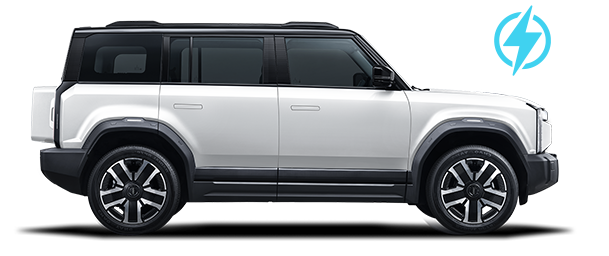
Chery Tiggo 9 CSH
The Chery Tiggo 9 CSH is equipped with a 34.46 kWh battery that provides a range of up to 180 km in pure EV mode. It takes only 20 minutes to charge from 20% to 80%, thanks to fast charging support with a CCS2 connector.
With such rapid charging, users can feel more comfortable using this car for high mobility needs. In addition, the Tiggo 9 CSH’s battery uses Lithium Iron Phosphate technology and is IP68-certified, making it resistant to both water and dust.
In terms of performance, the powertrain delivers a combined output of 395 PS and 650 Nm of torque. Driving comfort is further enhanced by the V2L (Vehicle-to-Load) feature with up to 6.6 kW capacity, allowing the battery to serve as an external power source.
Chery Tiggo 8 CSH
The Chery Tiggo 8 CSH comes with an 18.3 kWh battery that offers a driving range of up to 90 km in pure EV mode. For charging, this electric car provides flexible options with three different methods. Using a 2.2 kW portable charger, the battery can be fully charged from 10%–100% in about 8.5 hours.
Charging can be significantly faster with a 6.6 kW wall charger, which takes only about 3 hours. Meanwhile, with 40 kW fast charging support, the battery can be charged from 30% to 80% in just 20 minutes. This fast charging capability makes daily driving more convenient.
The battery used is Lithium Iron Phosphate (LiFePO4), well-known for being safe, durable, and IP68-certified, making it resistant to water and dust. It can also operate efficiently in extreme temperatures (from -35°C to 60°C), with LiFePO4 material that is more stable and less prone to combustion.
In terms of performance, this car produces a combined power output of 341 PS and 525 Nm of torque. Beyond its strong performance, the Tiggo 8 CSH is also equipped with a modern V2L feature that allows users to charge external devices while on the go.
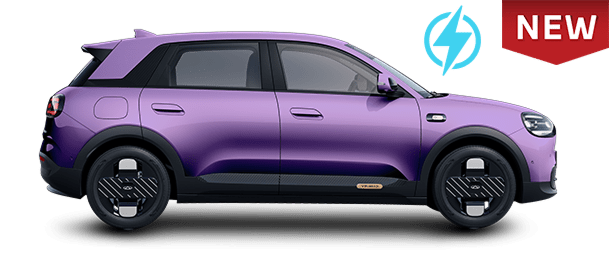
Chery E5
The Chery E5 is powered by a 61.1 kWh battery with a nominal voltage of 370 V and a current of 165 Ah. Charging takes only 28 minutes to go from 30% to 80% using DC fast charging. With AC charging via an onboard charger, a full charge takes about 6 hours and 45 minutes using an 11 kW charger.
Thanks to its fast charging capability and large-capacity battery, the Chery E5 is well-suited for both long-distance trips and high urban mobility. Its battery provides a range of up to 430 km based on WLTP standards, with efficient energy consumption of only around 155 Wh/km.
The E5’s battery is a Lithium Iron Phosphate (LiFePO4) blade cell type, known for its safety and durability. It is resistant to punctures, IP68-certified to withstand water up to 45 cm deep, and protected by a strong steel plate underneath.
In terms of performance, the Chery E5 is equipped with an electric motor that delivers 150 kW (204 PS) and 340 Nm of torque. Additional features include V2L for external charging, three levels of regenerative braking, and CCS2/Type 2 charging ports conveniently placed on the front grille.
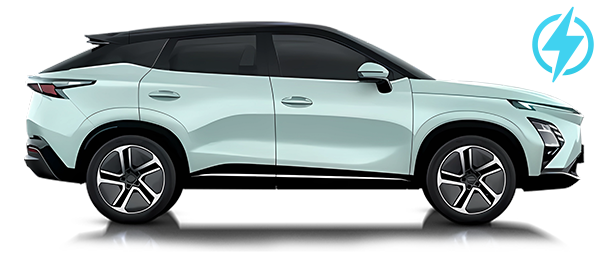
Chery J6
The Chery J6 is an electric SUV available in two variants: RWD (Rear Wheel Drive) and IWD (Intelligent All Wheel Drive), each with different battery capacities. The RWD variant comes with a 65.69 kWh battery offering a range of up to 426 km, while the IWD version has a 69.77 kWh battery with a range of up to 418 km.
For charging duration, the Chery J6 supports DC fast charging that can charge the battery from 30% to 80% in about 30 minutes with up to 85 kW power. Home charging can be done with a 6.6 kW AC charger (single-phase), taking about 9–10 hours for a full charge depending on the battery size.
With DC fast charging support, the J6 is versatile for both quick charging at public stations and regular charging at home. Additionally, it comes with a 3.3 kW V2L feature for powering external devices, as well as CCS2/Type 2 charging ports compatible with modern charging infrastructure.
Both J6 variants use Lithium Iron Phosphate (LiFePO4) batteries, known for being safe and durable. The batteries are IP68-certified for water and dust resistance and are protected by steel plates underneath for extra impact protection.
Read also: List of Electric Vehicle Charging Locations in Indonesia
Factors Affecting Electric Car Charging Time
The charging duration of an electric car can vary depending on several factors, including battery capacity, charger type, and more. Below are some of the key elements that influence EV charging time:
- Battery capacity: The larger the battery capacity of an electric vehicle, the longer it takes to reach a full charge. For example, a 30 kWh battery will charge faster than a 70 kWh battery when using the same type of charger.
- Charger type (AC vs. DC): AC chargers, usually found at home or in wallboxes, operate at lower power levels, requiring several hours for a full charge. Meanwhile, DC fast chargers available at public charging stations (SPKLU) can charge a battery up to 80% in just a matter of minutes.
- Available power supply: Charging at home with a standard electricity supply will generally take longer due to current limitations. On the other hand, public charging stations are usually equipped with higher power capacity, supporting faster charging.
- Battery condition: If the battery already has a significant charge remaining, charging time will be shorter. Additionally, extreme battery temperatures—too hot or too cold—can cause the battery management system to slow down charging for safety. Batteries with degraded performance also take longer to absorb energy.
- Battery management system: If the system detects excessive heat or overvoltage, it will automatically reduce charging speed to prevent damage. Thus, even when using fast charging, the charging rate may slow down as the battery approaches full capacity or under specific conditions.
Read also: How to Maintain an Electric Car Battery to Make It Last Longer
That concludes the information on electric car charging times, which can vary in duration. This knowledge is crucial for prospective EV buyers or new users to plan their trips efficiently and safely.
Charging duration is influenced by several factors, such as battery capacity, charger type, available power supply, and more. Electric cars that support fast charging are an ideal choice for those who need quicker charging, whether for daily mobility or long-distance travel.
For those considering switching to an electric vehicle, Chery’s range of products above could be the right choice for you. Explore the full specifications at chery.co.id or by visiting an official Chery dealer in your city.