When a car passes by silently and elegantly, we often forget that thousands of small "explosions" are happening every minute under its hood. An Internal Combustion Engine essentially works by burning a mixture of gasoline and air, which produces very loud booming sounds.
Without a silencing component, your car would sound deafening, much like an old fighter jet engine. This is where the Muffler plays the role of an unsung hero.
The muffler is not just a smoke exhaust pipe. It is an acoustic engineering device designed with precision to "tame" the wild sounds of the engine into a smooth hum that is comfortable to hear. Let's dissect this vital component deeper.
What is the Main Function of a Muffler?
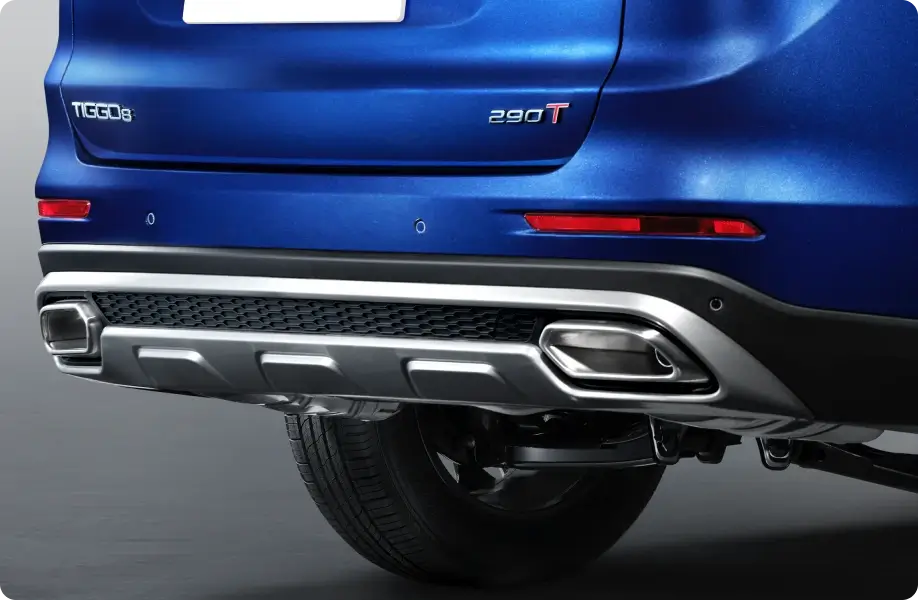
The muffler is located at the end of the exhaust system, right before the tailpipe visible on the rear bumper. Its function is more complex than just an air duct:
- Noise Reduction: This is its primary function. The muffler lowers the decibel level of explosions from the combustion chamber to meet road noise regulation standards and maintain environmental comfort.
- Regulating Back Pressure: The muffler helps create the right amount of back pressure. This pressure is important to assist engine valve performance and maintain torque (pull) at low engine RPMs so the car remains responsive during stop-and-go driving.
- Disposing of Toxic Gases: As the final part of the exhaust, the muffler directs exhaust gases (Carbon Monoxide, etc.) to the rear of the vehicle so they do not enter the cabin and poison the passengers.
How It Works: The Art of Cancelling Sound Waves
How can a metal tube eliminate loud sounds? The answer lies in a physics principle called Destructive Interference.
Inside the muffler tube, there is an intricate labyrinth consisting of baffles, perforated pipes, and resonance chambers.
- When the sound waves of engine explosions enter the muffler, they are reflected in various directions by the walls of this labyrinth.
- This design forces sound waves to collide with one another.
- When the peak of one sound wave meets the trough (valley) of another, they cancel each other out.
- The Result? Loud sound entering one side will exit as a much quieter sound on the other side.
Types of Mufflers Based on Character
Not all mufflers are created equal. Differences in internal design will result in different sound characters and performance.
1. Chambered/Reflective Muffler (Partitioned)
This is the type used by 90% of standard factory daily cars (OEM).
- Design: Uses many partitions (baffles) and empty chambers to reflect sound as much as possible.
- Character: Very quiet. The main priority is cabin comfort.
- Performance: Creates sufficiently high back pressure, good for fuel efficiency and low-RPM torque.
2. Straight-Through/Absorptive Muffler
Often referred to as a Free Flow or Racing exhaust.
- Design: Features a straight perforated pipe in the center surrounded by sound-dampening material like glasswool or steel fibers. There are no baffles blocking the airflow.
- Character: Bass-heavy, loud, and sporty sound.
- Performance: Exhaust gas flow is very smooth (minimal resistance). Good for power at high RPMs (high speed), but often makes the car wasteful on fuel and "sluggish" at initial acceleration if the engine is still standard.
Evolution of Comfort: From Dampening to Total Silence
In modern vehicle design, automotive engineers work hard to balance engine performance and Cabin Quietness. A good muffler is key so passengers can chat without needing to shout.
You can feel this premium standard of silence in the Chery Omoda 5 (C5). The exhaust system on this crossover has been designed with high precision. Its muffler works effectively to dampen noise from its turbo engine, filtering out harsh sound frequencies, and leaving a smooth yet sporty engine sound when you accelerate.
Conclusion
The muffler is a critical component that maintains harmony between a powerful engine and driving comfort. Understanding its types helps you not to change the exhaust arbitrarily, because an exhaust that is too "open" (free flow) on a standard engine can actually lower daily performance.
Whether through advanced dampening systems in gasoline engines or exhaust-free technology in electric cars, the goal remains the same: to provide peace on every journey.